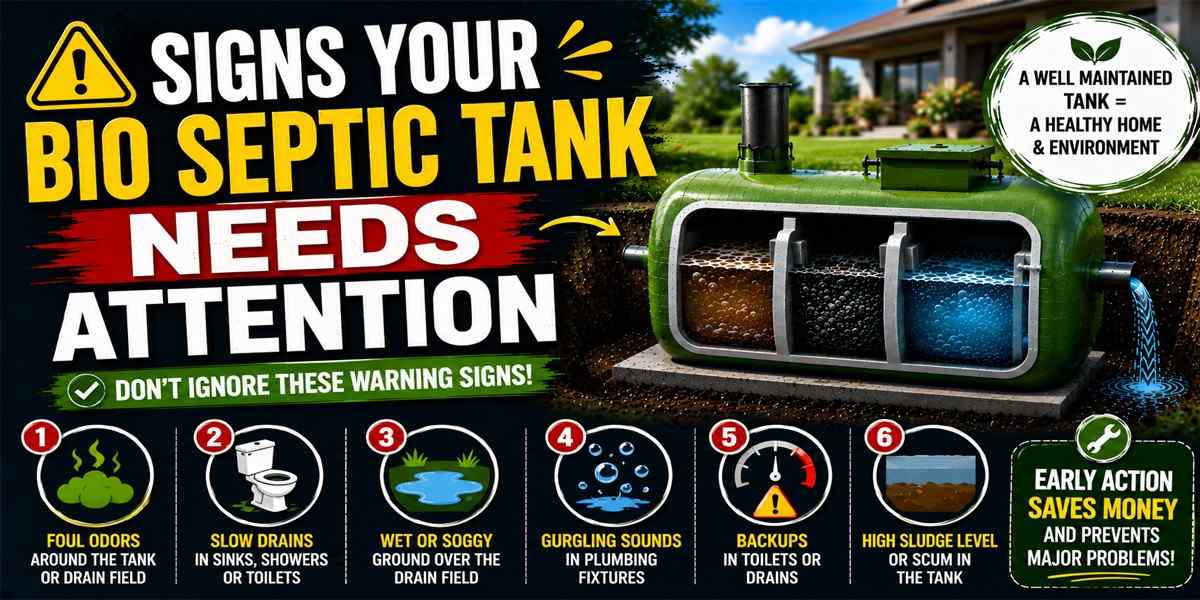
A failing septic system can quickly become a homeowner’s nightmare, resulting in expensive repairs, property damage, and potential health hazards. The key to avoiding catastrophic failure is recognizing warning signs early. Understanding what to look for allows you to address problems before they escalate into emergencies. This guide identifies the critical indicators that your bio septic tank requires professional attention.
Why Early Detection Matters
Your septic system works silently underground, handling thousands of gallons of wastewater annually. Most homeowners don’t think about their systems until something goes wrong. However, septic tank warning signs often appear gradually, giving you an opportunity to address problems before complete failure occurs. Early intervention saves thousands of dollars in emergency repairs and prevents environmental contamination.
Indoor Plumbing Warning Signs
The first indicators of septic problems typically manifest inside your home. These internal warning signs should never be ignored.
Slow Drains Throughout Your Home
If toilets, sinks, showers, and tubs drain slowly, your septic system may be struggling. Slow drainage suggests either excessive sludge accumulation in the tank or a failing drain field. When multiple fixtures throughout your home drain slowly simultaneously, it’s not a coincidental clog—it’s a system-wide problem.
Start by checking individual drains. A single slow fixture might indicate a local blockage. But slow drains everywhere indicate septic system issues requiring professional evaluation.
Persistent Sewage Backups
Raw sewage backing up into your home is the most serious warning sign. Toilet backups, water pooling in showers with no apparent drain, or sewage in sinks indicate your system has failed or is severely compromised. This is an emergency requiring immediate professional attention.
Never attempt to resolve sewage backups yourself. The health risks are severe, and improper handling can worsen the situation. Call a licensed septic professional immediately.
Toilet Flushing Problems
Toilets that refuse to flush, require multiple flushes to clear waste, or make gurgling sounds indicate pressure buildup in your system. This suggests either a blocked pipe, failed drain field, or tank capacity problems. Multiple toilets malfunctioning together (rather than one), points to systemic septic issues.
Unusual Water Pressure Changes
Sudden decreases in water pressure, especially when multiple fixtures run simultaneously, may indicate drain field failure. As the drain field loses capacity, water struggles to exit your system, creating backpressure that affects your overall water flow.
Outdoor Warning Signs
Your property’s exterior often displays more obvious bio septic issues than inside your home. These visible signs warrant immediate investigation.
Wet Spots or Soggy Areas
Unexplained wet spots, soft ground, or standing water over your drain field indicate system failure. The drain field should never be soggy or waterlogged under normal conditions. Wet areas suggest effluent is surfacing rather than properly percolating through soil.
This is particularly concerning because it exposes contaminated water at ground level, posing serious health risks. Never allow children or pets near wet areas over your drain field.
Unusually Lush Vegetation
While green grass is desirable elsewhere, unusually vibrant or fast-growing vegetation directly over your drain field is suspicious. This excessive plant growth indicates nutrient-rich effluent surfacing, signaling system problems.
Similarly, vegetation that appears stressed or diseased in specific areas might indicate chemical contamination from system failure.
Strong Odors Around Your Property
Persistent sewage smells near your tank, drain field, or anywhere on your property indicate problems. These odors suggest effluent is surfacing or leaking into areas where it shouldn’t. Never assume odors will resolve themselves—they indicate active system failure.
Smells become stronger and more widespread as problems worsen. Address them immediately before contamination spreads throughout your property.
Visible Tank Damage
If your tank is accessible, inspect it for visible cracks, breaks, or deterioration. Even small cracks allow untreated sewage to enter groundwater. Rust holes in metal tanks or significant concrete deterioration indicate imminent failure.
Cracks typically worsen over time due to freeze-thaw cycles, soil settling, or tree root intrusion. Professional repair or replacement becomes necessary before complete failure.
Mold or Algae Growth
Excessive mold or algae growth around your drain field area suggests moisture problems related to system failure. Green algae blooms over the drain field indicate surfacing effluent with high nutrient content.
Structural and Soil Indicators
Beyond visible water and vegetation, other physical signs indicate septic system problems.
Foundation Cracks or Settlement
Cracks in your home’s foundation, especially near the septic system, may indicate problems. Shifting soil caused by failed drain fields or tank settling can compromise house foundations. If foundation cracks coincide with other septic warning signs, systemic failure is likely.
Pooling Water After Rain
If water pools over your drain field area during or after rain, the soil has likely become compacted or contaminated, preventing proper drainage. Healthy drain fields absorb water quickly. Pooling suggests the system can no longer manage water absorption.
When to Call a Professional
Seek immediate professional help for:
- Sewage backups inside your home
- Multiple slow drains throughout the house
- Persistent odors around your property
- Visible wet areas over the drain field
- Unusual vegetation growth over the system
- Visible tank damage or cracks
- Repeated plumbing issues after professional repairs
- Systems older than 20 years without recent inspection
Schedule routine professional inspection annually for:
- Verification that the system functions properly
- Assessment of sludge and scum accumulation
- Drain field evaluation
- Documentation of system condition
- Professional recommendations for maintenance
Prevention is Easier Than Emergency Repair
The best approach to septic system problems is prevention. Regular maintenance prevents many issues that create warning signs. However, if warning signs do appear, prompt professional response minimizes damage and expense.
Simple Prevention Measures:
- Never ignore warning signs or hope they resolve
- Maintain proper water conservation practices
- Avoid flushing non-biodegradable items
- Keep grease out of drains
- Don’t plant large trees near your system
- Avoid parking over the drain field
- Schedule regular professional inspections
- Keep detailed maintenance records
Understanding Your System’s Response
Not all changes indicate problems. After heavy rain or high water usage, drain field areas may temporarily show moisture. This is normal if it dries within a few days. However, persistent wetness or pooling water indicates true problems.
Similarly, one slow-draining fixture might be a localized issue, while multiple slow drains suggest systemic failure. Context matters when evaluating warning signs.
Conclusion
Septic tank warning signs appear in various forms—some obvious, others subtle. Indoor plumbing changes, outdoor physical indicators, structural concerns, and odors all point to potential problems. The critical factor is recognizing these signs promptly and seeking professional evaluation.
Your septic system is too important to ignore. Protecting your home’s infrastructure, groundwater, and your family’s health requires vigilance. If you notice any warning signs discussed here, don’t hesitate to contact a licensed septic professional. Early intervention saves money, prevents environmental damage, and ensures your system continues operating reliably for years to come.
Leave a Reply