
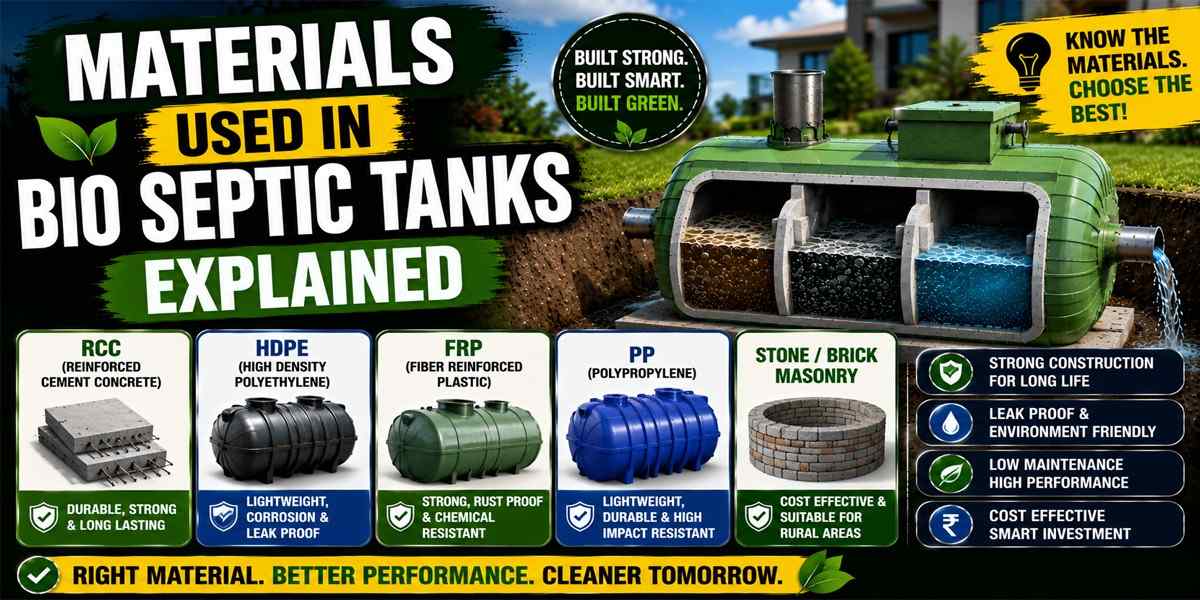
When it comes to managing household wastewater in areas without municipal sewage systems, bio septic tanks stand as a reliable and eco-friendly solution. Understanding the materials used in these systems is crucial for homeowners looking to make informed decisions about their septic tank construction and long-term maintenance. In this guide, we’ll explore the various septic tank materials that make these systems durable and effective.
What Is a Bio Septic Tank?
Before diving into the specific materials, it’s helpful to understand what a bio septic tank does. A bio septic tank is an underground wastewater treatment system that uses natural biological processes to break down human waste and greywater. Unlike conventional systems, bio septic tanks leverage beneficial bacteria to decompose waste, making them more environmentally friendly and efficient than older alternatives.
Primary Materials in Bio Septic Tank Construction
The choice of septic tank materials directly impacts the system’s durability, efficiency, and longevity. Let’s examine the most commonly used materials in modern septic tank construction.
Concrete
Concrete remains one of the most popular bio septic tank materials due to its strength and longevity. Reinforced concrete tanks, typically made with steel reinforcement bars, can last 40-50 years or more when properly maintained. These tanks are manufactured off-site and then transported to the installation location.
Advantages:
- Excellent durability and structural integrity
- Resistant to external pressure and ground movement
- Cost-effective compared to some alternatives
- Can withstand harsh environmental conditions
Considerations: Concrete tanks may develop cracks over time, particularly in areas with high groundwater levels or acidic soil conditions. Regular inspection and maintenance are essential to prevent leakage.
Fiberglass
Fiberglass has emerged as a premium choice for septic tank materials in recent years. These lightweight, durable tanks are manufactured using a resin-based composite material that offers exceptional strength-to-weight ratio. Fiberglass septic tank construction provides an alternative that addresses some limitations of concrete.
Advantages:
- Lightweight, making installation easier
- Resistant to corrosion and chemical degradation
- Non-porous surface prevents algae growth
- Excellent for areas with high water tables
- Minimal maintenance requirements
Considerations: Fiberglass tanks tend to be more expensive than concrete options. They may require special handling during installation to prevent damage.
Polyethylene (Plastic)
Polyethylene plastic tanks have gained popularity for residential septic systems. These single-piece tanks are molded from high-density polyethylene (HDPE) and offer several practical benefits for homeowners.
Advantages:
- Lightest material option, simplifying installation
- Highly resistant to corrosion and chemical attack
- Factory-sealed construction ensures water-tightness
- Lower cost than fiberglass
- Flexible design allowing installation in tight spaces
Considerations: Plastic tanks may be susceptible to degradation under prolonged UV exposure if improperly stored. Additionally, they require adequate soil stability and may need anchoring in areas with high water tables.
Secondary Components in Septic Tank Materials
Beyond the main tank material, several secondary components contribute to effective septic tank construction:
Baffles and Dividers
Internal baffles, typically made from PVC or concrete, direct wastewater flow through different treatment chambers. These components are crucial for allowing solids to settle while allowing treated water to continue toward the drain field.
Inlet and Outlet Pipes
These pipes, usually made from PVC or Schedule 40 plastic, connect the septic tank to your home’s drainage system and the drain field. Proper pipe material selection prevents root intrusion and ensures efficient wastewater flow.
Filter Media
Many modern bio septic tanks incorporate filter media made from materials like sand, gravel, or synthetic materials. These materials enhance biological treatment by providing surface area for beneficial bacteria to colonize.
Access Covers
Septic tank access covers are typically manufactured from plastic or concrete and provide maintenance and inspection points. Quality covers prevent unauthorized access and reduce soil infiltration.
Choosing the Right Bio Septic Tank Material
Selecting appropriate septic tank materials depends on several factors:
Soil Conditions: Clay soils with poor drainage may benefit from fiberglass or plastic tanks that resist groundwater infiltration better than concrete.
Budget: Concrete offers an economical solution, while fiberglass provides mid-range pricing and premium durability.
Installation Constraints: Tight spaces or difficult terrain might favor lightweight plastic or fiberglass options over heavy concrete tanks.
Longevity Expectations: If you plan to stay in your home long-term, investing in fiberglass or reinforced concrete may be worthwhile.
Local Regulations: Some jurisdictions have specific requirements regarding approved septic tank materials, so verification with local health departments is essential.
Maintenance Based on Tank Material
Understanding your septic tank’s material composition helps guide maintenance practices. Concrete tanks require regular inspection for cracks, while plastic and fiberglass tanks need monitoring to ensure proper anchoring and seal integrity. Regardless of material, all systems benefit from regular pumping every 3-5 years and responsible water usage.
Conclusion
The materials used in bio septic tank construction have evolved significantly, offering homeowners multiple options suited to different needs and budgets. Whether you choose concrete for its proven track record, fiberglass for its superior durability, or polyethylene for its ease of installation, understanding these septic tank materials ensures you make an informed decision that protects your property and the environment.
Investing time in learning about bio septic tank materials and proper construction standards will ultimately save you money on repairs and replacements while ensuring your wastewater management system operates efficiently for decades to come.
Leave a Reply