
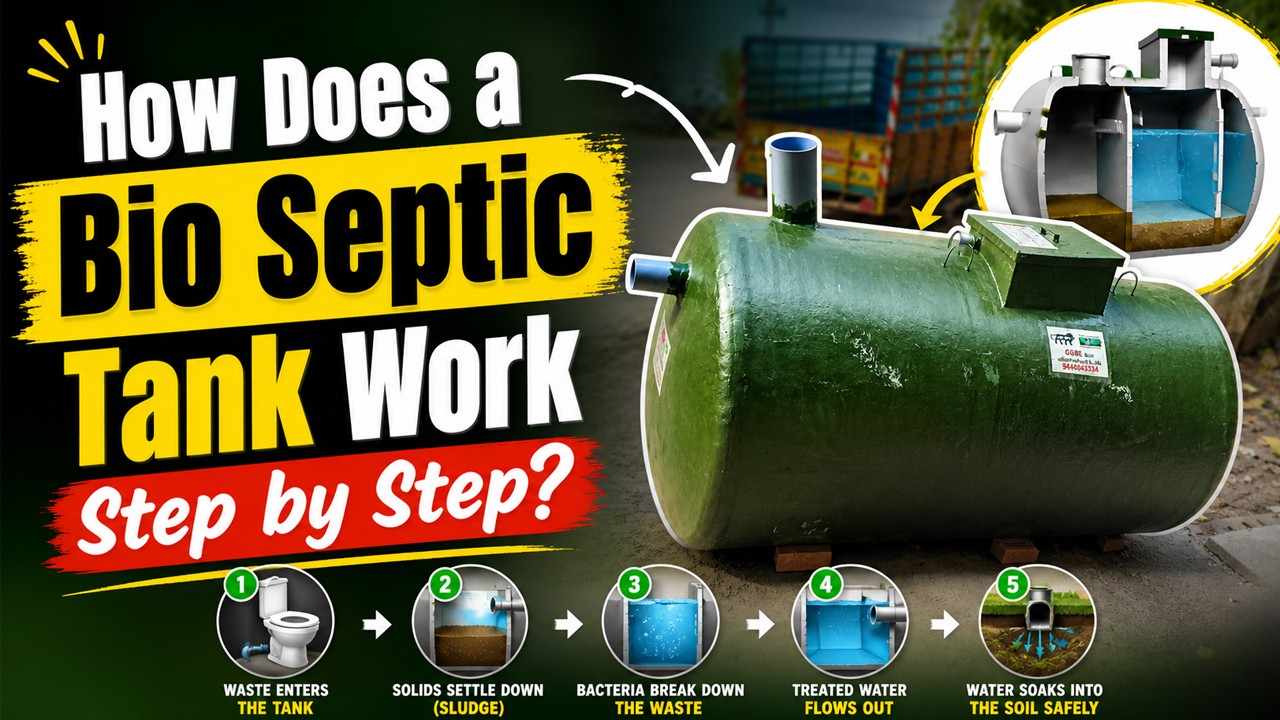
Understanding how bio septic tank working processes function is essential for homeowners considering this eco-friendly wastewater treatment solution. Whether you’re planning to install a new system or simply want to understand how bio septic tanks work, this comprehensive guide breaks down the entire bio septic tank process into easy-to-follow steps.
The Science Behind Bio Septic Tank Working
Before diving into the step-by-step process, it’s important to grasp the fundamental principle. Bio septic tanks leverage the power of naturally occurring bacteria and microorganisms to decompose organic waste. Unlike conventional septic systems that rely mainly on settling and basic decomposition, bio septic tanks create an optimized environment where beneficial bacteria can thrive and efficiently break down sewage into harmless byproducts.
The bio septic tank process is essentially nature’s own recycling system, working continuously to convert household wastewater into treated effluent safe for environmental discharge.
Step-by-Step: The Bio Septic Tank Process
Step 1: Wastewater Collection and Entry
The bio septic tank working cycle begins the moment wastewater leaves your home. All domestic sewage from toilets, sinks, showers, washing machines, and kitchen drains flows through your home’s plumbing system into the inlet pipe of the bio septic tank.
As wastewater enters the tank, it passes through an inlet baffle or T-pipe designed to slow down the flow. This controlled entry prevents turbulence that could disturb the settling process and ensures even distribution of waste throughout the chamber.
Step 2: Primary Separation and Settling
Once inside the primary chamber, gravity takes over. The bio septic tank process now separates waste into three distinct layers:
Bottom Layer (Sludge): Heavy solid waste, including human waste and food particles, sinks to the bottom of the tank forming a dense layer called sludge.
Middle Layer (Effluent): This is the liquid portion of wastewater, sitting between the sludge and scum layers. It contains dissolved organic matter and suspended particles.
Top Layer (Scum): Lighter materials like oils, grease, soap residues, and fats float to the surface, creating a scum layer.
This three-layer separation is crucial for efficient bio septic tank working because it allows bacteria to access and process waste more effectively.
Step 3: Anaerobic Bacterial Digestion
In the primary chamber, anaerobic bacteria (microorganisms that thrive without oxygen) begin breaking down the organic matter in the sludge layer. These bacteria are naturally present in human waste and multiply rapidly in the tank’s oxygen-free environment.
The anaerobic digestion process converts complex organic compounds into simpler substances like carbon dioxide, methane, and water. This biological breakdown significantly reduces the volume of solid waste, which is why bio septic tanks require less frequent pumping than traditional systems.
Step 4: Transfer to Secondary Chamber
After initial treatment in the primary chamber, the partially treated effluent flows through an internal baffle or transfer pipe into the secondary chamber. This design prevents scum and sludge from moving forward, allowing only the middle liquid layer to progress through the bio septic tank process.
The transfer mechanism is carefully engineered to maintain proper flow rates, giving bacteria adequate time to work on the waste while preventing overflow.
Step 5: Aerobic Bacterial Treatment
Many modern bio septic tank working systems incorporate aerobic treatment in the secondary chamber. Here, oxygen-loving bacteria take over the purification process. Some systems use:
- Natural Aeration: Through vents or perforated pipes that allow oxygen to enter
- Mechanical Aeration: Using air pumps or diffusers to actively introduce oxygen
- Bio-media: Special porous materials that provide surface area for aerobic bacteria to colonize
Aerobic bacteria are more efficient than anaerobic bacteria, breaking down organic matter up to 90% faster. They consume dissolved organic pollutants, nitrogen compounds, and pathogens, producing cleaner water as a byproduct.
Step 6: Advanced Filtration
As the bio septic tank process continues, the effluent passes through filtration stages. Many systems include:
- Biological filters with specialized media supporting bacterial colonies
- Settling zones where remaining suspended solids can settle out
- Filter screens that trap particles before final discharge
This filtration step ensures that only thoroughly treated water exits the system.
Step 7: Disinfection (Optional)
Some advanced bio septic tank working systems include a disinfection stage using:
- UV light treatment to kill remaining pathogens
- Chlorination tablets for bacterial reduction
- Ozone treatment for chemical-free disinfection
While not always necessary, disinfection provides an extra safety layer, especially in environmentally sensitive areas.
Step 8: Final Discharge
The final step in the bio septic tank process is the discharge of treated effluent. The now-clarified water exits through the outlet pipe into:
- Drain field (leach field): A network of perforated pipes buried in gravel-filled trenches where water percolates into the soil
- Soak pit: A covered chamber filled with filtering media allowing water to gradually seep into surrounding soil
- Irrigation system: In some cases, treated water can be used for subsurface irrigation
The soil acts as a final natural filter, removing any remaining impurities before the water rejoins the groundwater table.
Continuous Cycle and Bacterial Regeneration
To truly understand how bio septic tanks work, you must recognize that this isn’t a one-time process. The bio septic tank working cycle operates continuously, 24/7. As new wastewater enters, the bacterial population adjusts, multiplying when there’s more waste to process and stabilizing during low-usage periods.
The bacteria are self-sustaining, feeding on the continuous supply of organic matter. This biological balance is why it’s crucial to avoid flushing harsh chemicals, antibacterial soaps, or non-biodegradable materials that could kill beneficial bacteria and disrupt the bio septic tank process.
Monitoring and Maintenance
For optimal bio septic tank working performance:
- Monitor sludge levels annually to determine pumping needs
- Inspect baffles and filters for blockages
- Ensure aerators (if present) are functioning properly
- Check for odors or slow drainage indicating potential issues
- Use bacterial additives if recommended by your installer
Conclusion
The bio septic tank process is a remarkable example of biological engineering, turning household waste into environmentally safe water through natural bacterial action. By understanding each step of bio septic tank working—from initial separation through bacterial digestion to final discharge—you can better appreciate this efficient, eco-friendly wastewater treatment solution.
Whether you’re a current owner or considering installation, knowing how your system works helps you maintain it properly and ensure years of trouble-free operation.
Leave a Reply