
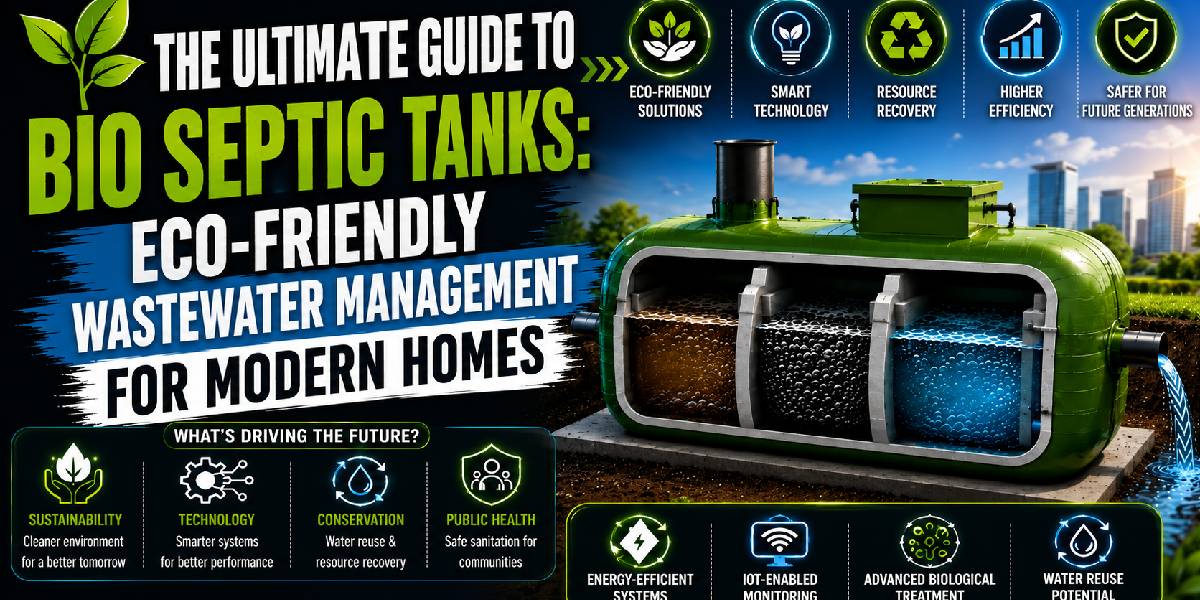
If you’ve ever dealt with a backed-up conventional septic system, you know the drill — the smell, the cost, the embarrassment of calling an emergency pump-out on a Sunday. There’s a better way. Bio septic tanks are quietly revolutionizing how modern homes handle wastewater, and they’re doing it without wrecking the environment in the process.
Whether you’re building a new home, going off-grid, or simply tired of your old system failing you, this guide covers everything you need to know. Let’s dig in.
What Is a Bio Septic Tank? Understanding Eco-Friendly Wastewater Management
A bio septic tank — sometimes called a bio-digester — is an advanced wastewater treatment system that uses living microorganisms to break down household sewage on-site. Unlike a conventional septic tank that simply holds waste and separates solids from liquids, a bio system actively digests organic matter using carefully cultivated bacterial colonies.
Think of it like a miniature water treatment plant buried in your backyard. Except quieter. And far kinder to the earth.
The core process relies on anaerobic digestion — bacteria working in oxygen-free conditions to consume organic waste and convert it into water, carbon dioxide, and in some systems, biogas that can actually power a stove or heat water. That’s not just waste management. That’s waste transformation.
How a Bio Septic Tank Works: The Science Made Simple
Here’s what happens from the moment you flush:
- Primary chamber — Wastewater enters and heavy solids sink to the bottom as sludge. Lighter material floats to the top as scum.
- Biological digestion zone — Anaerobic bacteria get to work, consuming organic material and dramatically reducing waste volume through waste decomposition.
- Filtration stage — Partially treated effluent passes through filter media, removing suspended particles.
- Final effluent output — The treated water exits the system clean enough — in many cases — for water recycling in irrigation or garden use.
The whole process happens continuously, silently, and without chemicals. It’s sustainable wastewater management at its most elegant.
Bio Septic Tank vs. Conventional Septic Tank: Key Differences
| Feature | Bio Septic Tank | Conventional Septic Tank |
|---|---|---|
| Treatment Method | Biological digestion | Basic separation only |
| Effluent Quality | High — suitable for reuse | Low — requires drain field |
| Environmental Impact | Minimal | Moderate to high |
| Pump-out Frequency | Every 3–5 years | Every 1–3 years |
| Odour | Minimal | Can be significant |
| Biogas Production | Yes (some systems) | No |
| Installation Cost | Higher upfront | Lower upfront |
| Long-term Cost | Lower | Higher |
The upfront cost is real. But when you factor in fewer pump-outs, lower maintenance, and the potential for biogas production, a bio system pays for itself faster than most people expect.
The Environmental Case: Why Bio Septic Systems Are Genuinely Eco-Friendly
Conventional septic systems leak nitrates and phosphorus into groundwater. Rivers, lakes, and coastal areas near high-density rural housing suffer because of it. A properly functioning bio-digester changes that equation entirely.
Here’s what makes bio septic systems environmentally superior:
- They remove up to 95% of biological oxygen demand (BOD) from wastewater
- Organic waste treatment happens on-site, eliminating the need for trucking waste to treatment facilities
- Treated effluent can feed garden irrigation systems, closing the water recycling loop
- Some systems capture methane for biogas production, reducing household energy demand
- They support eco-friendly sanitation goals aligned with UN Sustainable Development Goal 6 — clean water and sanitation for all
“The shift toward decentralized, biological wastewater treatment isn’t just a trend — it’s a necessary evolution in how we manage our relationship with water.” — Environmental engineer perspective, widely cited in sustainable building literature
Bio Septic Tank Maintenance: Keeping Your System Thriving
Good news — a bio septic tank requires less maintenance than its conventional cousin. Bad news — neglect it and you’ll undo everything the biology works so hard to achieve.
Monthly habits that protect your system:
- Avoid pouring bleach, antibacterial cleaners, or chemical drain unblockers down drains — they kill the very bacteria doing the work
- Don’t flush wipes, medications, or cooking oils
- Use septic tank maintenance products specifically designed for biological systems if needed
- Monitor water usage — overloading the system disrupts the bacterial balance
Annual professional checks should include:
- Sludge depth measurement
- Effluent quality testing
- Inspection of filters, pumps, and aeration components
- Bacterial colony health assessment
The micro-bio enviro system inside your tank is a living ecosystem. Treat it like one.
Is a Bio Septic Tank Right for Your Home?
Ask yourself these questions:
- Are you off the municipal sewer grid? Then a bio system is almost certainly your best long-term option.
- Do you care about groundwater quality? A bio-digester protects your local environment far better than a conventional pit.
- Are you building new? Install it right from day one and avoid retrofitting headaches later.
- Do you want to reuse treated water? Only a bio system gives you effluent clean enough for water recycling on-site.
If you answered yes to even two of those, it’s worth getting a site assessment done. Most installers offer free or low-cost initial consultations.
Final Thoughts
Bio septic tanks aren’t just a technical upgrade — they represent a genuine shift in how we think about waste. Organic matter isn’t garbage. It’s a resource. Through anaerobic digestion, biological treatment, and smart sustainable wastewater management, a bio system turns one of a home’s messiest problems into something surprisingly elegant.
The planet benefits. Your wallet benefits. And honestly? You never have to think about your septic system again — which might be the greatest luxury of all.
Leave a Reply