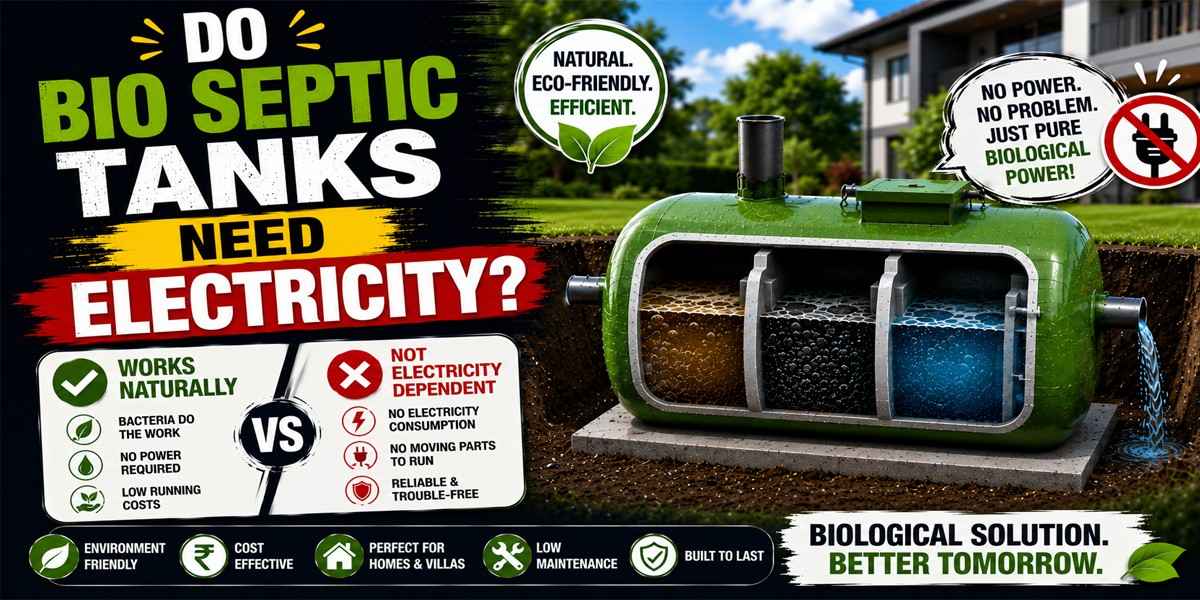
When you’re considering a septic system for your home or property, one question that often comes up is whether you’ll need to run an electrical line to power it. The answer isn’t as straightforward as yes or no—it depends on the type of system you have. Understanding your septic tank’s bio septic tank electricity requirements is crucial for installation, maintenance, and long-term operation costs. Let’s explore what you need to know about your septic system’s septic tank power requirement.
Traditional Gravity-Fed Septic Systems
The good news is that most conventional septic tanks don’t require electricity at all. These gravity-fed systems rely on one of nature’s most reliable forces—gravity—to move wastewater from your home through the treatment process.
In a traditional setup, wastewater flows downhill from your home into the septic tank. Inside the tank, solids settle to the bottom while lighter materials float to the top. The partially treated effluent then flows by gravity into the drain field, where soil naturally filters and treats the wastewater before it percolates into the groundwater.
Because the entire process depends on gravity rather than mechanical pumps, these systems function without any electricity. This makes them extremely reliable, especially during power outages. Even if your home loses power for days, your septic system continues to work normally, processing household waste without interruption.
When Bio Septic Tanks Do Need Electricity
While traditional gravity systems don’t require power, certain situations and system types do require bio septic tank electricity connections. Understanding these scenarios helps you plan accordingly if you’re installing a new system or upgrading an existing one.
Aerobic Treatment Units (ATUs)
Aerobic septic systems actively introduce oxygen into the treatment process, accelerating the breakdown of waste. This oxygenation requires an electric air pump, making electricity a necessity. These systems are often used in environmentally sensitive areas, for properties with poor soil conditions, or when stricter effluent quality standards apply.
Pressure Distribution Systems
Some properties can’t rely on gravity due to terrain or soil conditions. In these cases, a pump lifts treated effluent from the tank to the drain field. This pump requires electricity to operate continuously or on demand, depending on the system design.
Aerobic Septic Systems with Enhanced Features
Modern aerobic treatment systems often include electronic controls, timers, and monitoring systems that require power. These advanced features provide better treatment quality and allow property owners to monitor system performance remotely.
Septic Pumps and Lift Stations
If your septic tank sits lower than your drain field or home plumbing—common in flat terrain—you’ll need an effluent pump in a lift station. This pump moves treated wastewater uphill to the drain field and requires a dedicated electrical connection.
Understanding Your Septic Tank Power Requirement
If your system does require electricity, the typical septic tank power requirement is modest. Most residential septic pumps and aerobic systems operate on standard 110-volt or 220-volt household current and draw relatively little power.
A submersible septic pump typically uses between 500 to 1,500 watts when running. Since these pumps operate intermittently rather than continuously, your overall electricity usage remains low. Many homeowners find that the added electrical cost is minimal—often just a few dollars per month.
Aerobic treatment systems consume more power due to continuous air pump operation, but still typically use less than 2 kilowatts. The exact consumption depends on system size and design.
Backup Power and Reliability
One important consideration regarding septic tank electricity needs is what happens during power outages. If your system requires electricity, you might want to consider a backup power solution for extended outages.
Some property owners install battery backup systems that keep pumps running during short power failures. Others rely on portable generators for extended outages. If you have a gravity-fed system, however, no backup power is necessary—your system will continue functioning normally even during multi-day power loss.
Cost Implications of Power Requirements
The decision between a gravity-fed system and one requiring electricity has cost ramifications beyond just monthly power bills. Consider these factors:
Initial Installation Costs: Systems requiring electricity may need trenching for electrical lines, which adds to installation expenses. Gravity systems avoid this cost entirely.
Monthly Operating Costs: The additional electricity consumption is typically minimal but worth factoring into your budget.
Backup Power Costs: If you choose backup power solutions, factor in the cost of battery systems or generators.
Maintenance Considerations: Electrical systems have more moving parts that may require periodic maintenance or eventual replacement.
Choosing the Right System for Your Needs
When deciding whether your property needs a system with septic tank power requirement, consider:
- Terrain and Soil Conditions – Gravity systems work best with appropriate slope and good soil. Poor conditions may necessitate powered systems.
- Local Regulations – Environmental protection areas may require higher-quality treatment, often necessitating aerobic or powered systems.
- Property Layout – Elevation differences between tank location and drain field determine if pumping is necessary.
- Reliability Preferences – If power outages are common in your area, gravity systems offer unmatched reliability.
- Long-Term Costs – Factor in installation, operation, and maintenance expenses over the system’s lifespan.
Maintenance of Electrically-Powered Systems
If your system requires electricity, proper maintenance becomes even more critical. Have your pump and electrical components inspected annually by a professional. Check floats and switches that control pump operation, and ensure backup power systems are in working order.
Keep the area around electrical connections dry and protected. If you notice unusual electrical usage or fluctuations, have a technician inspect the system promptly.
Conclusion
The question of whether your septic system needs electricity depends entirely on your specific installation. Traditional gravity-fed septic tanks function perfectly without any electrical connection, making them ideal for reliability and low operating costs. However, certain conditions and system types require bio septic tank electricity connections.
Understanding your septic tank’s septic tank power requirement helps you plan for installation, budget for ongoing costs, and prepare for reliability scenarios like power outages. Whether your system needs power or not, the key to longevity is proper maintenance and understanding how your system works. Consult with a septic professional to determine what your property needs and ensure your septic tank energy needs are met with the most appropriate and cost-effective solution for your situation.
Leave a Reply