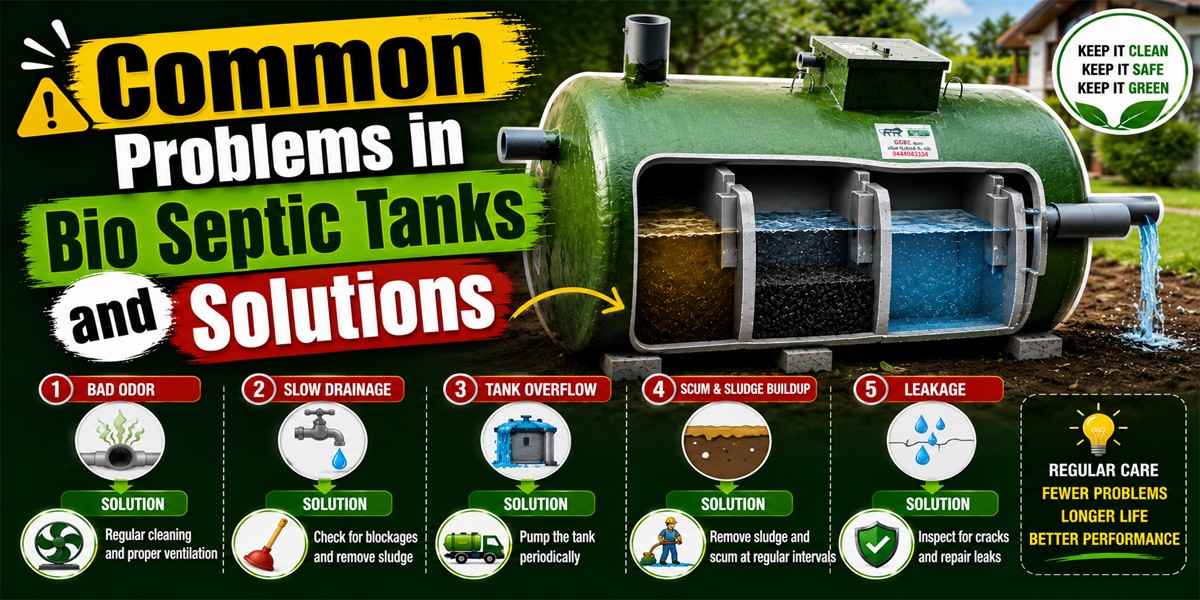
Bio septic tanks are efficient wastewater treatment systems, but like any mechanical system, they can experience issues that affect performance. Understanding common bio septic tank problems and their solutions helps homeowners identify issues early and take corrective action before minor concerns become expensive repairs. This comprehensive guide covers the most frequent septic tank issues you might encounter and provides practical advice on how to fix septic tank issues effectively.
Aeration System Failures
One of the most common bio septic tank problems involves the aeration system, which is critical for maintaining the aerobic bacteria that treat your wastewater. When the air pump fails, oxygen levels drop rapidly, causing beneficial bacteria to die off and allowing anaerobic conditions to develop.
Symptoms: Foul odors emanating from the tank area, alarm system activation, gurgling sounds in drains, or visible system malfunction indicators.
Solutions: First, check if the pump is receiving power by verifying circuit breakers and electrical connections. Inspect air filters for clogs—dirty filters restrict airflow and cause pump failure. Replace filters every 6-12 months as preventive maintenance. If the pump motor has failed, replacement is necessary and should be done promptly to prevent complete system collapse. Clean or replace diffusers if they’re clogged with mineral deposits or biofilm buildup.
Unpleasant Odors
Persistent foul smells around your property are telltale signs of septic tank issues that require immediate attention. While some odor during pumping is normal, constant bad smells indicate problems.
Causes: Insufficient aeration, bacterial imbalance, overfull tank, blocked vent pipes, or drain field saturation.
Solutions: To fix septic tank issues related to odor, start by ensuring the aeration system functions properly. Add bacterial supplements specifically designed for bio septic systems to restore microbial balance. Check vent pipes on your roof for blockages from bird nests, leaves, or ice. Have your tank inspected and pumped if it’s approaching capacity. If odors persist near the drain field, you may have saturated soil requiring professional assessment and potential drain field repair or expansion.
Slow Draining Fixtures
When multiple drains throughout your house empty slowly, the problem likely originates in your septic system rather than individual fixture clogs.
Causes: Tank reaching capacity, clogged inlet or outlet baffles, blocked distribution pipes, or saturated drain field.
Solutions: Begin troubleshooting these bio septic tank problems by checking when the tank was last pumped. If it’s been more than 3-5 years, schedule pumping immediately. Inspect and clean inlet/outlet filters and baffles—these components trap solids and can become obstructed. Avoid excessive water usage that overwhelms system capacity. If the drain field is saturated, reduce water consumption temporarily and ensure surface water drains away from the area. Persistent slow draining may require professional camera inspection to identify blockages.
Sewage Backup
Sewage backing up into your home represents a serious emergency among septic tank issues that demands immediate action.
Causes: Completely full tank, major blockage, drain field failure, or system hydraulic overload.
Solutions: Stop all water usage immediately to prevent further backup. Call a septic professional for emergency service. Never attempt to add chemical drain cleaners, as these damage your bio septic system’s bacterial colonies. The tank likely needs emergency pumping, but backup can also indicate more serious problems like collapsed pipes or complete drain field failure requiring extensive repairs
Alarm System Activation
Modern bio septic systems include alarm systems that alert homeowners to problems. Understanding what triggers these alarms helps you fix septic tank issues quickly.
Causes: Aeration pump failure, high water level, electrical problems, or excessive water usage.
Solutions: First, check the alarm panel to identify the specific alert. Verify that the aeration pump is running—listen for the motor hum and feel for air movement. Check your electrical panel for tripped breakers. If recent heavy water usage triggered the alarm (like hosting guests), reduce consumption temporarily and monitor the situation. If the alarm persists after basic checks, contact a technician for diagnosis.
Standing Water or Wet Spots
Soggy ground, standing water, or unusually lush grass over your drain field indicates bio septic tank problems that need attention.
Causes: Drain field saturation, excessive water usage, system overload, or drain field failure.
Solutions: Immediately reduce household water consumption to give the soil time to absorb existing effluent. Divert roof gutters, sump pumps, and surface water away from the drain field area. Avoid driving or parking over the area, as compaction worsens the problem. Have a professional inspect the system to determine if you’re dealing with temporary saturation or permanent drain field failure. Advanced cases may require drain field expansion, replacement, or installation of a mound system.
Bacterial Die-Off
The biological component of your system can fail if beneficial bacteria die off due to various factors.
Causes: Introduction of antibacterial products, excessive chemical cleaning agents, medications in wastewater, or prolonged aeration system failure.
Solutions: To fix septic tank issues related to bacterial balance, stop using antibacterial soaps, harsh cleaners, and bleach. Add high-quality bacterial supplements formulated for aerobic septic systems weekly for a month, then monthly thereafter. Ensure the aeration system runs continuously to provide necessary oxygen. Recovery typically takes 2-4 weeks with proper treatment.
High Water Levels
Consistently high water levels in your tank, even shortly after pumping, signal underlying septic tank issues.
Causes: Excessive water usage, groundwater infiltration, blocked outlet pipe, or drain field problems.
Solutions: Conduct a water audit to identify excessive usage sources. Fix leaky toilets and faucets immediately. Check that surface water drains away from the tank. Inspect the tank lid and risers for cracks allowing groundwater entry. Have a professional check the outlet pipe and distribution box for blockages. If the drain field isn’t accepting effluent properly, you may need soil testing and drain field rehabilitation.
Leave a Reply