
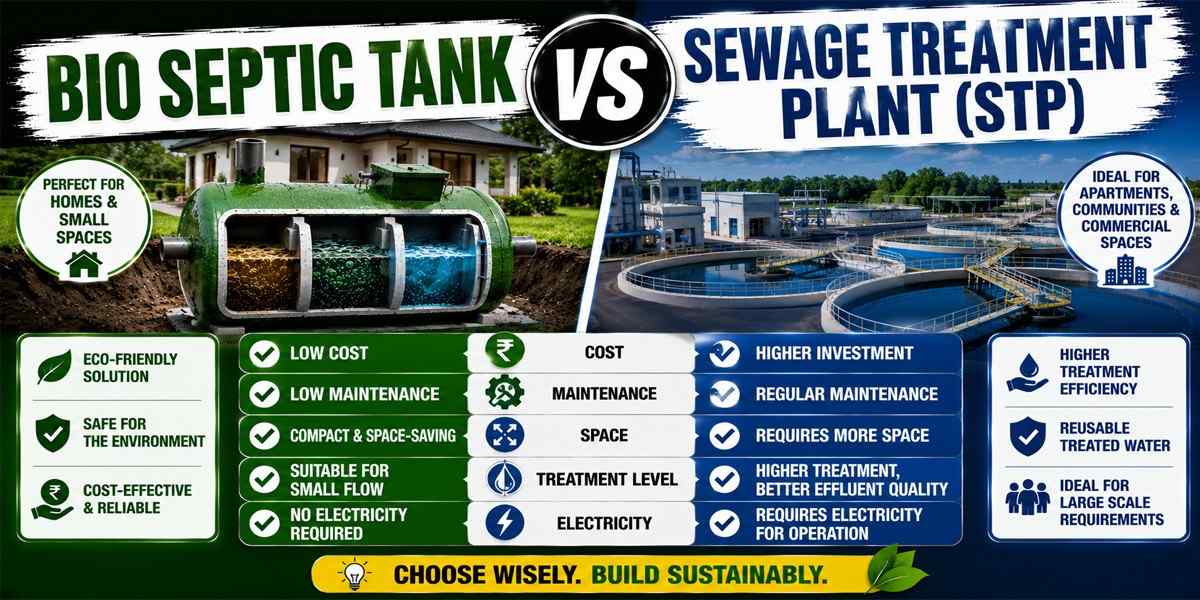
Choosing the right wastewater management system for your property is a critical decision that impacts your budget, environmental footprint, and long-term maintenance responsibilities. The bio septic tank vs stp debate often confuses homeowners and property developers alike. Understanding the fundamental differences between these systems helps you make an informed choice tailored to your specific needs.
What Is a Bio Septic Tank?
A bio septic tank is an underground wastewater treatment system that uses natural bacterial processes to break down organic waste. These tanks separate solid waste from liquids, allowing beneficial bacteria to decompose organic matter. The treated effluent then flows into a drain field where soil provides additional filtration before the water returns to the groundwater table.
Modern bio septic tanks often incorporate biological additives to enhance bacterial activity, improving treatment efficiency and extending the time between necessary pump-outs. They’re designed primarily for residential properties and small commercial establishments with moderate wastewater generation.
What Is a Sewage Treatment Plant (STP)?
A sewage treatment plant is a mechanical wastewater treatment system that uses multiple stages of physical, biological, and chemical processes to treat sewage to a higher standard than septic tanks. STPs employ aeration, sedimentation, biological filtration, and often disinfection to produce effluent clean enough for surface water discharge or reuse in irrigation and toilet flushing.
These systems are more complex, requiring electricity to power pumps, aerators, and other mechanical components. STPs are suitable for larger residential complexes, commercial buildings, hotels, hospitals, and industrial facilities with high wastewater volumes.
Key Differences: STP vs Septic Tank
Treatment Efficiency
The most significant difference in the septic vs STP comparison lies in treatment quality. Bio septic tanks typically achieve 60-70% pollution reduction, removing basic organic matter and solids. The effluent still contains bacteria and nutrients requiring soil filtration in the drain field.
STPs achieve 90-95% pollution reduction through advanced treatment processes. The treated water meets environmental standards for discharge into rivers, lakes, or municipal drainage systems. Some advanced STPs produce water suitable for non-potable reuse, making them more environmentally compliant.
Installation Costs
Bio septic tanks are significantly more affordable upfront. Installation costs typically range from ₹2,50,000 to ₹5,00,000 for residential systems, depending on tank size and soil conditions. The simplicity of the system keeps initial investment relatively low.
STPs require substantial capital investment, usually ranging from ₹12,00,000 to ₹40,00,000 or more for residential applications. Commercial-scale systems can cost several crores of rupees. The complex infrastructure, mechanical components, and sophisticated treatment stages drive these higher costs.
Operating Expenses
Bio septic tanks have minimal operating costs. They require no electricity, making them economical to run. Primary expenses include periodic pumping every 3-5 years (₹25,000-₹40,000 per service) and optional biological additives (₹800-₹2,500 monthly).
STPs incur ongoing operational costs including electricity for pumps and aerators, regular testing to ensure compliance with environmental standards, replacement parts for mechanical components, and professional servicing every 3-6 months. Annual operating costs can range from ₹40,000 to ₹1,60,000 or more.
Maintenance Requirements
Bio septic tanks demand relatively simple maintenance. Homeowners should schedule professional inspections annually, pump the tank every 3-5 years, avoid flushing harmful chemicals or non-biodegradable materials, and consider using biological additives to maintain bacterial health.
STPs require intensive maintenance including daily monitoring of system performance, weekly or bi-weekly sludge removal from settling tanks, regular cleaning of filters and aerators, periodic replacement of mechanical parts, and compliance testing to meet regulatory requirements. Many owners contract professional service providers for ongoing maintenance.
Space Requirements
Bio septic tanks need significant land area for both the tank and drain field. A typical residential system requires 500-1,500 square feet of suitable soil for the drain field, making them impractical for properties with limited space or poor soil conditions.
STPs have a smaller physical footprint since they don’t require extensive drain fields. The compact design makes them ideal for urban properties, high-density developments, and locations with unsuitable soil or high water tables where conventional septic systems won’t function properly.
Environmental Impact
Bio septic tanks provide basic treatment relying heavily on soil for final filtration. If improperly maintained or if soil conditions are inadequate, they can contaminate groundwater with nitrates, bacteria, and other pollutants. They work best in rural areas with suitable soil and sufficient land.
STPs offer superior environmental protection through advanced treatment that removes more pollutants before discharge. The higher treatment standards prevent groundwater contamination and protect surface water quality. However, they consume electricity and require chemical inputs for some treatment processes.
Regulatory Compliance
Bio septic tanks face fewer regulatory requirements in most jurisdictions. Basic permits and periodic inspections usually suffice, though regulations vary by location. They’re generally acceptable for residential properties meeting specific site criteria.
STPs operate under stricter environmental regulations requiring discharge permits, regular effluent quality testing, certified operators in some cases, and compliance reporting to environmental authorities. These regulatory demands add complexity and cost but ensure environmental protection.
Which System Is Right for You?
Choose a Bio Septic Tank If:
- You own a single-family home or small property
- You have adequate land with suitable soil conditions
- You prefer lower upfront and operating costs
- You’re in a rural or suburban area without municipal sewage
- You want minimal maintenance complexity
- Local regulations permit septic systems
Choose an STP If:
- You’re developing multi-unit residential or commercial properties
- You have limited land or poor soil conditions
- You need to discharge into surface water or reuse treated water
- You require higher treatment standards for regulatory compliance
- You can manage higher costs and maintenance demands
- You’re in areas where septic systems aren’t viable
The Bottom Line
The bio septic tank vs stp decision ultimately depends on your specific circumstances. Bio septic tanks excel in affordability, simplicity, and suitability for residential properties with adequate land. STPs provide superior treatment, regulatory compliance, and functionality in challenging locations or high-density developments.
Consider your property size, soil conditions, wastewater volume, budget, environmental regulations, and long-term maintenance capabilities when making this decision. Consulting with wastewater management professionals and local authorities ensures you select the system that best meets your needs while complying with all applicable regulations.
Both systems serve important roles in wastewater management. Understanding their differences through this septic vs STP comparison empowers you to choose wisely and invest in the right solution for your property.
Leave a Reply