
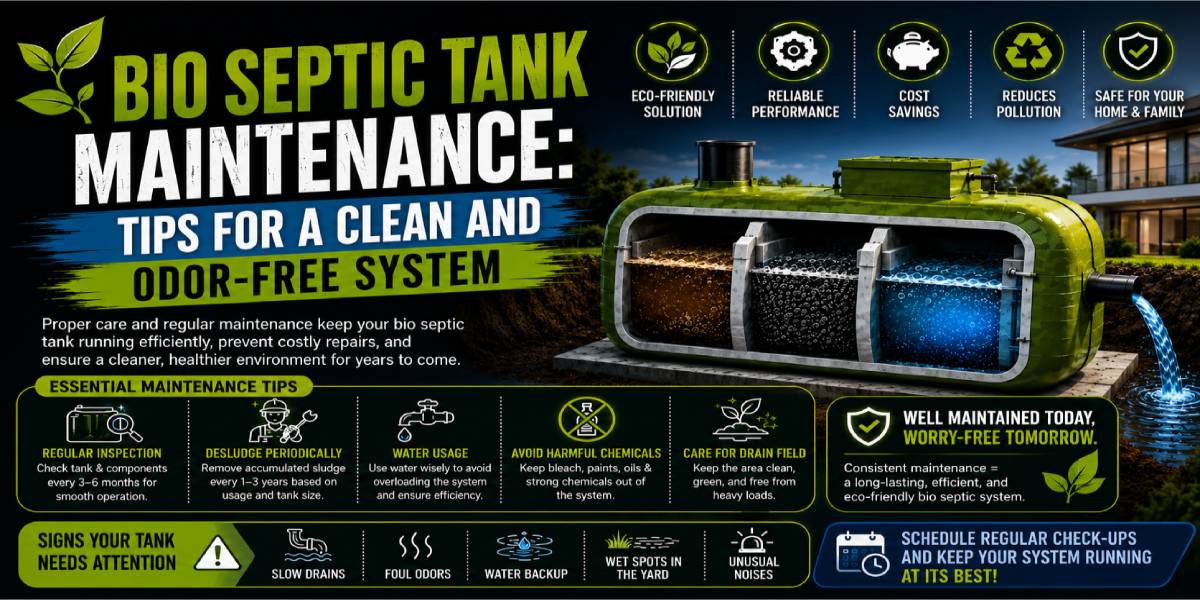
A bio septic tank works quietly under your yard for years, and most homeowners never think about it until something goes wrong. Then it’s a bad smell drifting through the kitchen window, or a toilet that takes forever to drain. The good news? Bio septic tank maintenance isn’t complicated once you understand what the system actually needs.
This guide walks through everything: how a bio septic tank works, the daily habits that keep it healthy, how to spot trouble early, and exactly how often to inspect, clean, and pump it. Whether you’re a new homeowner trying to figure out how to maintain a bio septic tank or you’ve been winging it for years and want to do better, you’ll find practical, no-nonsense advice here. Let’s get into it.
Understanding How a Bio Septic Tank Works
Before you can take care of something, you need to know how it functions. A surprising number of maintenance mistakes happen simply because homeowners treat their bio septic tank like a regular concrete pit, when it’s actually a small biological ecosystem.
What Is a Bio Septic Tank?
A bio septic tank is a sealed wastewater treatment unit that relies on naturally occurring bacteria to break down household waste, rather than depending purely on physical settling like older systems do. Traditional septic tanks mostly just separate solids from liquids and store sludge until a truck comes to pump it out. A bio septic system goes a step further: it actively cultivates bacterial colonies that digest organic matter, which means less sludge builds up and the effluent leaving the tank is noticeably cleaner.
You’ll sometimes see these systems called biodigester tanks, bio-toilets, or ABRT (Anaerobic Bio-digestion Reactor Technology) units, depending on the manufacturer. They’re especially common across urban and semi-urban India, where space is tight and tanker access for pumping isn’t always convenient. In cities like Chennai, many apartment complexes and independent homes have switched to bio septic tanks specifically because they need far less frequent desludging than the old-style chambers.
How the Bacterial Treatment Process Works
Here’s where it gets interesting. Inside the tank, wastewater typically moves through two or three connected chambers. In the first chamber, anaerobic bacteria — microorganisms that thrive without oxygen — feed on solid waste and break it down into liquid, gas, and a small residual sludge layer. As the partially treated water overflows into the next chamber, a different set of bacteria continues refining it, removing the bulk of the remaining organic load.
By the time effluent reaches the final chamber or exits to the drain field, it’s typically 90 to 98 percent free of harmful pathogens, depending on the system and how well it’s maintained. Some advanced units add an aerobic stage, pumping oxygen into a separate chamber so aerobic bacteria can finish the job. That’s why aerator-equipped systems need electricity, and why a power cut lasting more than a day or two can actually stress the bacterial colony.
Think of the tank as a tiny digestive system. Just like your gut needs the right bacteria to break down food properly, your tank needs healthy bacteria colonies to break down waste. Disrupt that balance with harsh chemicals, and the whole system slows down, sometimes dramatically.
Common Bio Septic Tank Types and Materials
Not every bio septic tank looks or performs the same way. Manufacturers build them from different materials, and the choice affects durability, cost, and how much maintenance you’ll eventually do.
| Material | Durability | Typical Use Case | Maintenance Notes |
|---|---|---|---|
| HDPE (High-Density Polyethylene) | Excellent, corrosion-resistant | Residential, compact urban plots | Lightweight; check seams during inspection |
| Fiberglass (FRP) | Good, crack-resistant | Homes and small commercial sites | Easy to install; monitor for surface wear over time |
| Concrete | Very strong, long lifespan | Larger properties, older installations | Heavier; watch for cracking and root intrusion |
| Multi-chamber Biodigester | Varies by brand | Bio-toilets, retrofits, rural and urban homes | Often modular; filter changes vary by manufacturer |
There’s no single “best” material for everyone. A family on a small urban plot in Chennai might prefer a compact HDPE unit, while a larger rural property might still lean toward concrete for its sheer toughness.
Why Routine Maintenance Matters for Lifespan and Performance
A well-maintained bio septic tank can realistically last 15 to 30 years. Skip the maintenance, though, and you’re looking at a system that fails in a fraction of that time. Neglect doesn’t just shorten septic system lifespan — it creates real health and environmental risks. Untreated effluent leaking into soil can contaminate groundwater, and a backed-up system inside the home is a genuine sanitation hazard for your family.
There’s also a financial angle most people don’t consider until it’s too late. Routine bio septic tank care typically costs a few hundred to a couple thousand rupees per service visit. A full system failure, on the other hand, can mean tens of thousands of rupees in excavation, repair, or replacement costs. Maintenance isn’t an optional extra; it’s cheap insurance against an expensive disaster.
Essential Bio Septic Tank Maintenance Tips for Homeowners
This is the heart of bio septic tank care: the everyday choices that either keep your bacteria thriving or slowly poison them. None of these tips require special tools or expert training. They just require a bit of awareness about what goes down your drains.
What Can Safely Go Into Your System
Your bio septic tank is built to handle human waste, toilet paper, and the normal organic byproducts of daily life. That’s genuinely about it. Everything else is a guest the system didn’t invite, and too many uninvited guests will eventually clog the works.
Items You Should Never Flush
This list trips up almost every household at some point, often without realizing it:
- Wet wipes — even ones labeled “flushable” rarely break down quickly enough
- Plastic materials — wrappers, cotton swab sticks, packaging of any kind
- Sanitary products — pads, tampons, and applicators
- Cigarette butts — the filters don’t decompose and the chemicals harm bacteria
- Diapers — they expand and absorb liquid instead of breaking down
- Dental floss — it tangles around pump components and inlet pipes
- Coffee grounds and food scraps — these belong in the compost or trash, not the toilet
A good rule of thumb: if you wouldn’t compost it, don’t flush it.
Why Grease and Cooking Oil Don’t Belong Down the Drain
Pouring leftover cooking oil or grease down the kitchen sink feels harmless in the moment, but it solidifies once it cools. Inside your pipes and tank, that congealed fat clings to surfaces, narrows the inlet pipe, and forms a stubborn layer that bacteria struggle to digest. Over months, it contributes to slow drains and blockages that are genuinely painful to clear. Pour used oil into a sealed container and toss it with regular trash instead. Your pipes — and your future self — will thank you.
Managing Water Usage to Avoid Overloading the System
Every liter of water you send down the drain eventually passes through your tank. Send too much too fast, and you don’t give the bacteria enough time to do their job before the effluent gets pushed out toward the drain field. This is one of the most overlooked aspects of household septic maintenance.
A few practical habits help here:
- Spread laundry loads across the week instead of running five loads back-to-back on a Sunday.
- Fix leaking taps and running toilets promptly; a small drip adds up to hundreds of extra liters a month.
- Install water-efficient fixtures like low-flow showerheads and dual-flush toilets where you can.
- Avoid letting the garden hose or pressure washer drain into the septic line.
None of these require a lifestyle overhaul. They’re small adjustments that protect your system’s capacity over the long run.
Choosing Septic-Safe Household Cleaners
Here’s a hard truth: bleach, strong antibacterial soaps, and heavy-duty drain chemicals don’t discriminate between harmful germs and the beneficial bacteria your tank depends on. Wipe them all out, and you’re left with a tank that can’t process waste efficiently, which often shows up as septic tank bad odor within days.
Switch to biodegradable, septic-safe cleaning products wherever possible. Brands that explicitly market themselves as “septic-safe” or “greywater safe” are formulated to clean effectively without nuking your tank’s bacterial population. Used occasionally and in small amounts, ordinary cleaners usually won’t cause a crisis. The danger comes from heavy, repeated use over time.
Feeding the System with Bacterial or Enzyme Additives
Even with good habits, bacterial populations can dip — after a vacation with no water use, after an illness in the house that involved antibiotics going down the drain, or just from natural die-off. Bio septic tank bacteria additives, sold as enzyme powders, liquid concentrates, or septic-safe tablets, help restock the colony and keep digestion running smoothly. Many manufacturers recommend a monthly or quarterly dose, though this varies, so check your specific tank’s documentation.
“Most septic failures I see aren’t sudden. They’re the result of months of small chemical insults to the bacteria, and by the time the smell shows up, the colony is already struggling to recover.” — a common observation echoed by septic service technicians across maintenance forums and trade publications.
A Quick Daily, Weekly, and Monthly Habit Checklist
| Frequency | What to Check or Do |
|---|---|
| Daily | Notice any odor, listen for unusual aerator sounds, and watch drainage speed. |
| Weekly | Check control panel lights, listen for alarm tones, and inspect the chamber if visible. |
| Monthly | Clean the air filter (if applicable), add bacterial supplements if recommended, and inspect for leaks. |
How to Prevent and Eliminate Bio Septic Tank Odors
Odor is usually the first sign that something’s off, and it’s also the complaint that brings most homeowners to search for help in the first place. Let’s break down why it happens and how to fix it.
Main Causes of Bio Septic Tank Odor
A handful of culprits cause the vast majority of odor complaints:
- Bacterial imbalance from chemical exposure or sudden water overload
- A blocked or damaged vent pipe that traps gas instead of releasing it safely
- Excess sludge buildup that hasn’t been removed on schedule
- A failing aerator in systems that rely on oxygen-based treatment
- A cracked lid or loose-fitting access cover that lets gas escape near ground level instead of through the vent
Bacterial Imbalance and How It Triggers Bad Smells
When the bacterial colony is healthy, decomposition happens in a relatively controlled, low-odor way. When it’s stressed or depleted, waste breaks down incompletely or through different chemical pathways, releasing more hydrogen sulfide and methane than usual — and that’s the rotten-egg smell everyone dreads. This is precisely why maintaining a healthy bacteria colony sits at the center of effective septic tank odor control, rather than treating odor as a separate problem to mask with air freshener.
The Role of Proper Ventilation
Septic systems are designed with vent pipes specifically to release gas safely above roof level or away from living areas. If that vent gets blocked by debris, a bird’s nest, or even ice in colder climates, gas has nowhere to go and starts pushing back through drains and toilet traps instead. Good septic tank ventilation isn’t optional decoration; it’s a core part of how the system stays odor-free.
Preventing Blockages and Backups
Blockages and odor often arrive together, since trapped waste decomposes unevenly and produces stronger gases. Keeping inlet and outlet pipes clear, avoiding the non-flushable items listed earlier, and scheduling timely septic tank sludge removal all work together to prevent the kind of blockage that turns into a smell — and eventually a backup.
Quick Troubleshooting Tips for Existing Odor
If you’re already dealing with a smell, try this sequence before calling for service:
- Check that all access lids and seals are properly closed and not cracked.
- Reduce water usage for a day or two to ease pressure on the system.
- Add a manufacturer-recommended bacterial or enzyme treatment.
- Inspect the vent pipe for visible blockages you can safely clear.
- If the smell persists beyond a few days, call a professional — it likely points to a mechanical issue like aerator failure rather than something a home remedy can fix.
These steps cover most of what people search for under tips to prevent septic tank smell, and they work for the majority of mild-to-moderate odor cases.
Warning Signs Your Bio Septic System Needs Attention
Catching trouble early is the single biggest factor separating a quick, cheap fix from an expensive emergency repair. Here are the signs your bio septic tank needs maintenance that homeowners should never ignore.
Slow Drains and Gurgling Sounds
If your sink or tub drains slower than usual, or you hear a gurgling sound after flushing, air is getting trapped somewhere it shouldn’t be. This often signals a partial blockage forming in the pipe or the early stages of an overloaded tank.
Foul Odors Indoors or Outdoors
A smell that lingers near drains, the bathroom, or the yard above the tank itself is rarely a one-off. It usually means either a bacterial imbalance, a blocked vent, or a lid that isn’t sealing properly.
Pooling Water or Unusually Green, Lush Grass Near the Tank
Effluent that isn’t draining properly into the soil sometimes surfaces as standing water or unusually vibrant grass right above the tank or drain field. It looks harmless, even pretty, but it actually points to a system that’s struggling to absorb and treat wastewater the way it should.
Aerator Noise, Alarm Lights, or Control Panel Warnings
For systems with electric components, a red alarm light, an unusual humming change, or a tripped breaker are immediate red flags. Aerobic bacteria can start dying within 24 to 48 hours of an aerator failure, so this particular warning sign deserves same-day attention rather than a “we’ll get to it next week” approach.
When These Signs Mean It’s Time to Call a Professional
A single slow drain might just need a plunger. But if you notice two or more of these signs together — say, slow drainage plus an odor, or pooling water plus an alarm light — it’s time to bring in a professional rather than experiment further on your own.
Bio Septic Tank Cleaning and Inspection Schedule
Consistency beats intensity here. A few minutes of regular checking prevents the kind of neglect that leads to costly repairs.
Monthly Visual Inspection Checklist
- Look for pooling water, cracks, or settling around the tank
- Confirm access lids are intact and properly secured
- Check for odor near the tank and vent pipe
- Note drainage speed throughout the house
Quarterly Maintenance Tasks
- Test alarms and control panel functions (for electric systems)
- Inspect and clean air filters
- Add bacterial supplement if your system calls for it
- Review water usage patterns for the household
Checking Inlet and Outlet Pipes
Inlet and outlet pipes are common points of blockage because waste and grease tend to accumulate right where the flow changes direction. During a bio septic tank inspection, a technician (or a careful homeowner) checks these connection points for buildup, cracks, or root intrusion, especially if there are trees nearby.
Monitoring Sludge Accumulation
Even efficient bio septic tanks accumulate some residual sludge over time, just far more slowly than traditional systems. Many manufacturers recommend checking sludge depth annually using a measuring tool, then scheduling removal once it reaches roughly a third of the tank’s chamber depth.
Drain Field Inspection
The drain field, sometimes called the leach field, finishes the treatment process by letting soil bacteria filter the effluent further. Keep heavy vehicles off it, avoid planting trees with aggressive root systems nearby, and watch for soggy patches that suggest the field is becoming saturated or clogged.
How Often Should You Pump or Desludge a Bio Septic Tank?
This is one of the most common questions homeowners ask, and the honest answer is: it depends on usage, household size, and tank design. That said, here’s a general benchmark for bio septic tank cleaning schedule planning:
| System Type | Typical Desludging Frequency | Notes |
|---|---|---|
| Traditional Septic Tank | Every 1–3 Years | No active bacterial treatment; sludge builds up faster. |
| Bio Septic Tank (Anaerobic) | Every 3–5 Years | Bacterial digestion helps slow sludge accumulation. |
| Bio Septic Tank (with ABRT/Aerobic Stage) | Every 5+ Years | Most efficient treatment process with minimal solid residue. |
Recommended Bio Septic Tank Maintenance Schedule
| Task | Frequency | Why It Matters |
|---|---|---|
| Visual Odor and Drainage Check | Daily | Catches early warning signs before they escalate. |
| Control Panel and Alarm Check | Weekly | Confirms electrical components are functioning properly. |
| Air Filter Cleaning | Monthly | Prevents aerator overheating and motor strain. |
| Bacterial/Enzyme Top-Up | Monthly or Quarterly | Maintains a healthy bacteria colony for waste breakdown. |
| Full Professional Inspection | Annually | Identifies structural or mechanical issues early. |
| Sludge Level Check | Annually | Determines whether desludging is needed soon. |
| Pumping/Desludging | Every 3–5 Years | Removes accumulated solids before overflow or system failure. |
Common Bio Septic Tank Maintenance Mistakes to Avoid
Even well-meaning homeowners fall into a handful of predictable traps. Here’s what tends to go wrong, and why.
Overusing Bleach and Harsh Chemicals
A little bleach now and then probably won’t tank your system, but daily use of strong disinfectants steadily erodes the bacterial population responsible for breaking down waste. This mistake alone accounts for a huge share of bio septic tank troubleshooting calls.
Flushing Non-Biodegradable Waste
We covered this earlier, but it’s worth repeating: wipes, sanitary products, and plastics don’t belong in the system no matter how convenient flushing feels in the moment.
Ignoring Slow Drains or Gurgling Sounds
Treating a slow drain as a minor annoyance rather than an early warning is one of the most common — and most costly — mistakes homeowners make.
Delaying Sludge Removal
Pushing desludging past the recommended window doesn’t save money. It just shifts a moderate cost now into a much larger emergency cost later, once sludge backs up into the drain field or the house itself.
Planting Trees Too Close to the Tank
Roots seek out moisture, and a septic tank or drain field is essentially a moisture magnet. Roots that infiltrate pipes or tank walls cause cracks and blockages that are expensive and disruptive to repair.
Skipping Professional Inspections
DIY checks catch a lot, but a trained technician notices things homeowners typically miss: hairline cracks, early aerator wear, or subtle changes in effluent clarity that indicate a developing bacterial problem.
What These Mistakes Actually Cost You Down the Line
Case Study Example: Consider a hypothetical household in Chennai that skipped professional inspections for six years while using bleach-based cleaners daily. By year five, slow drains had become a weekly issue, and by year six, the family faced a backup that required emergency desludging plus pipe repair — a bill that landed well over ten times what a single routine inspection would have cost. This kind of scenario plays out constantly across residential septic system maintenance, and it illustrates exactly why small, consistent care beats reactive crisis management.
DIY vs. Professional Bio Septic Tank Maintenance
Not every task requires a technician, and not every task should be attempted without one. Here’s how to split the work sensibly.
Tasks You Can Safely Handle Yourself
- Daily odor and drainage observation
- Choosing septic-safe cleaning products
- Managing household water usage
- Adding manufacturer-approved bacterial supplements
- Monthly air filter cleaning (if accessible without opening the main chamber)
- Keeping the area around the tank and drain field clear
When It’s Time to Call in a Professional
- Annual full system inspection
- Sludge level measurement and pumping
- Aerator, pump, or control panel repairs
- Persistent odor that doesn’t resolve with basic troubleshooting
- Any sign of structural damage, cracking, or leakage
Average Cost of Servicing, Desludging, and Repairs
| Service | Typical Cost Range | Frequency |
|---|---|---|
| Routine Inspection | Low, a few hundred to a thousand rupees equivalent | Annually |
| Bacterial/Enzyme Additive | Low, ongoing small expense | Monthly or Quarterly |
| Desludging/Pumping | Moderate | Every 3–5 Years |
| Aerator or Pump Repair | Moderate to High | As Needed |
| Full System Replacement | High | Once Every 15–30 Years (Ideally) |
Exact pricing varies significantly by region, tank size, and local service providers, so treat these as general planning ranges rather than fixed quotes. Several bio septic tank cleaning service providers across Tamil Nadu and other regions offer annual maintenance contracts that bundle inspection, additive top-ups, and priority emergency response into one predictable fee, which many homeowners find easier to budget for than one-off service calls.
Choosing a Bio Septic Tank That’s Easier to Maintain
If you’re installing a new system or replacing an old one, the model you choose has a direct impact on how much future maintenance you’ll deal with.
| Household Size | Recommended Tank Capacity |
|---|---|
| 2–4 People | 1,000–1,500 Liters |
| 5–7 People | 1,500–3,000 Liters |
| 8+ People or Commercial Use | 3,000–5,000+ Liters |
Undersizing a tank for your household is one of the fastest ways to create chronic overload problems, so when in doubt, size up rather than down.
Features That Reduce Future Maintenance
- Built-in filters that catch debris before it reaches the main chamber
- IoT-enabled sensors that alert you to tank levels or malfunctions via a phone app
- Modular, multi-chamber design that improves treatment efficiency and reduces sludge buildup
- Improved bacterial strains from the manufacturer, engineered to digest waste faster
Spending a bit more upfront on these features often pays for itself within a few years through reduced servicing needs.
Conclusion: Keeping Your Bio Septic Tank Clean and Odor-Free for the Long Run
Good bio septic tank maintenance really comes down to a few consistent habits: watch what goes down the drain, protect the bacterial colony with septic-safe products, keep an eye out for early warning signs, and stick to a sensible inspection and pumping schedule. None of this demands expert-level knowledge. It just demands a little consistency.
Treat your tank as the quiet, hardworking part of your home it actually is, and it will reward you with decades of trouble-free, odor-free service. Skip the basics, and you’ll eventually pay for it — usually at the worst possible time. If you’re ready to put a system in place, start with the checklists in this guide, mark your calendar for that annual inspection, and consider connecting with a trusted bio septic tank servicing provider in your area for the tasks better left to a professional.
Frequently Asked Questions About Bio Septic Tank Maintenance
Why does my bio septic tank smell?
Odor almost always traces back to one of a few causes: a bacterial imbalance from chemical exposure, a blocked vent pipe, excess sludge, or a failing aerator in electric systems. Start with the troubleshooting steps earlier in this guide, and call a professional if the smell doesn’t clear within a few days.
Can I use bleach in a bio septic tank?
Occasional, small amounts of bleach typically won’t cause lasting damage. Frequent or heavy use, though, kills the beneficial bacteria your tank depends on for waste breakdown, so it’s best to switch to septic-safe cleaning products for everyday use.
How often should a septic tank be inspected?
Most manufacturers and service providers recommend a full professional inspection once a year, with simple visual and odor checks happening far more often, ideally daily or weekly.
Do bio septic tanks need cleaning?
Yes, though far less often than traditional tanks. Bio septic tanks still accumulate a small amount of residual sludge over time and typically need desludging every three to five years, depending on usage and design.
What causes septic tank odors?
The leading causes include bacterial imbalance, blocked ventilation, sludge buildup, and mechanical failures like a broken aerator. Each of these disrupts the normal decomposition process and leads to stronger, more noticeable gases.
How long does a bio septic tank last?
With consistent maintenance, a quality bio septic tank can last 15 to 30 years. Neglect, harsh chemical use, and skipped inspections can shorten that lifespan considerably.
Leave a Reply