
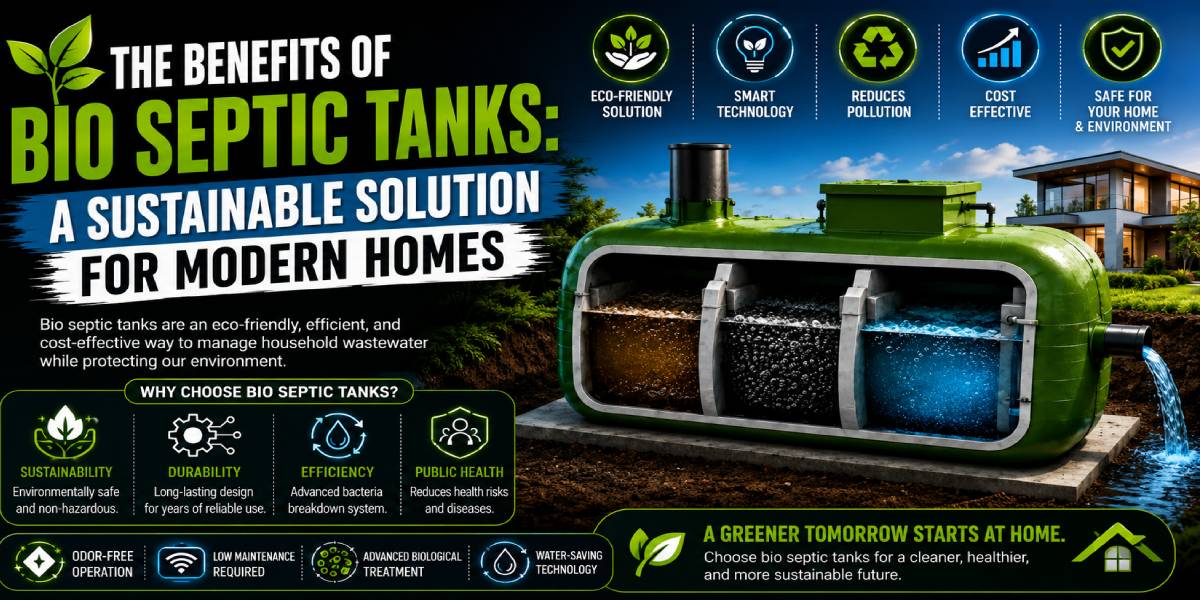
If you’ve ever dealt with a failing septic system, you already know the nightmare. The smell. The soggy patch of grass over the drain field. The emergency plumber showing up on a Saturday morning. Now imagine a system that practically takes care of itself — one that cleans wastewater so thoroughly it can safely return to the soil, produces almost no odour, and lasts decades longer than the tank your grandfather had. That’s not a fantasy. That’s a bio septic tank.
The benefits of bio septic tanks are reshaping the way modern homeowners think about wastewater management. Whether you’re building a new home, replacing a failing system, or simply trying to live more sustainably, this guide covers everything you need to know — from how they work, to what they cost, to why they’re almost certainly the smartest long-term investment you can make for your property.
Let’s get into it.
What Is a Bio Septic Tank? (And How Is It Different From What You Have Now?)
The Plain-English Definition
A bio septic tank is a wastewater treatment system that uses living microorganisms — bacteria, primarily — to break down sewage and household wastewater. Instead of simply storing waste and hoping nature sorts it out slowly (which is essentially what a conventional tank does), a bio system actively processes waste through biological activity, producing a much cleaner effluent in the process.
Think of it like the difference between letting fruit rot in a bag versus composting it properly. Both break things down. But one is controlled, efficient, and produces something useful — the other just creates a mess.
The term “bio septic tank” covers a range of biological wastewater treatment technologies. What they all share is a reliance on microbial ecosystems — the anaerobic digestion of organic matter, and often an aerobic treatment stage too — to clean water before it returns to the environment.
How Does a Bio Septic Tank Actually Work?
Here’s the process, broken down step by step:
- Wastewater enters the primary chamber. Solids sink to the bottom and form sludge. Lighter material like grease floats to the top as scum. This is standard primary settlement — same as any septic tank.
- Anaerobic bacteria get to work. In oxygen-free conditions, anaerobic microbes break down the settled sludge. This is the classic anaerobic digestion process — the same biological mechanism used in industrial biogas production. It reduces sludge volume significantly and begins breaking down pathogens.
- The liquid moves to the secondary (biological) treatment stage. Depending on the system, this might be an aeration chamber (where oxygen is pumped in to feed aerobic bacteria), a biofilter, or a constructed wetland. Aerobic bacteria are far more efficient at breaking down organic matter than anaerobic ones — they can remove up to 95% of biochemical oxygen demand (BOD) from the water.
- Tertiary treatment (in more advanced systems). Some bio septic systems include UV disinfection, sand filtration, or membrane filtration as a final polishing step, killing remaining pathogens and producing water clean enough for subsurface irrigation.
- Clean effluent is discharged. The treated water drains into a leach field, is used for sub-surface irrigation, or in some approved systems, is safely discharged to surface water.
The result? Wastewater that enters your system as raw sewage leaves it dramatically cleaned — stripped of most pathogens, nutrients, and organic matter. That’s the power of harnessing biology rather than fighting it.
Types of Bio Septic Tanks
Not every bio system is built the same. Here’s a quick overview of the main types you’ll encounter:
| System Type | How It Works | Best For | Key Advantage |
|---|---|---|---|
| Aerobic Treatment Unit (ATU) | Pumps air into the tank to supercharge aerobic bacteria. | Suburban homes, sensitive sites | Very high effluent quality |
| Anaerobic Baffled Reactor (ABR) | Series of chambers slow waste movement, maximising anaerobic digestion. | Rural/remote properties | Low energy, robust performance |
| Constructed Wetland | Plants and microbes in a gravel bed treat effluent. | Large rural blocks | Aesthetic, zero energy, biodiversity bonus |
| Bio-filter System | Effluent trickles through media (coconut coir, foam, etc.) colonised by bacteria. | Small to medium homes | Compact, low maintenance |
| Membrane Bioreactor (MBR) | Combines biological treatment with membrane filtration. | High-density areas, strict regulations | Highest effluent quality possible |
Bio Septic Tank vs Conventional Septic Tank: The Real Difference
How Traditional Septic Tanks Work (And Why They Fall Short)
A conventional septic tank is basically a buried concrete or fibreglass box. Waste enters, solids settle, and partially treated liquid drains out into a leach field. The soil does most of the actual treatment. This system has worked — sort of — for over a century. But it has serious limitations:
- Effluent quality is poor. You’re largely relying on soil absorption to finish the job.
- Leach fields fail. Soil becomes saturated or clogged with biomat over time.
- Groundwater contamination is a real risk, especially near rivers, bores, or high water tables.
- They smell. Anaerobic-only systems produce hydrogen sulphide — that classic rotten egg odour.
- They need regular pumping — typically every 2–4 years.
As regulations tighten globally around groundwater protection and eco-friendly sanitation, conventional tanks are increasingly being restricted or outright banned in sensitive areas. That trend isn’t reversing.
Head-to-Head Comparison
| Feature | Conventional Septic Tank | Bio Septic Tank |
|---|---|---|
| Treatment Method | Anaerobic only | Aerobic + anaerobic (multi-stage) |
| Effluent Quality | Low — 50–70% BOD removal | High — up to 95%+ BOD removal |
| Odour Levels | Noticeable to strong | Minimal to none |
| Groundwater Protection | Poor | Excellent |
| Pumping Frequency | Every 2–4 years | Every 4–8 years (varies by type) |
| Leach Field Stress | High | Low |
| Suitable for Sensitive Sites | Often no | Yes |
| Average System Lifespan | 20–30 years | 30–50 years |
| Long-term Cost | Higher (failures, fines) | Lower (fewer interventions) |
| Environmental Impact | Significant | Minimal |
The numbers don’t lie. A conventional tank is cheaper on day one. But over a 20-year period, the maintenance costs, potential failure costs, and regulatory compliance costs often tip the balance heavily in favour of bio septic tank benefits.
The Core Benefits of Bio Septic Tanks for Modern Homes
Benefit #1 — Superior Environmental Protection
This is the big one. Groundwater protection is arguably the most important reason to choose a biological septic system, and the evidence is compelling.
Conventional septic systems discharge nitrogen, phosphorus, bacteria, and viruses into the soil — and from there, into groundwater. In areas with high water tables, rivers, or bore-water supplies nearby, this is a serious public health and ecological risk. Nutrient-laden leachate causes eutrophication in waterways — that process where excessive nutrients trigger algae blooms that starve aquatic life of oxygen. You’ve probably seen it: green, murky water in a pond near a residential area. Septic systems are frequently a contributing cause.
Bio septic tanks, by contrast, remove up to 95% of nitrogen and phosphorus before effluent hits the soil. They slash pathogen loads by orders of magnitude. The water that leaves a well-functioning bio system is, by conventional septic standards, remarkably clean. That’s real, measurable protection for local ecosystems — and for the communities that rely on groundwater and surface water downstream.
Sustainable waste treatment isn’t just a marketing phrase here. It’s a quantifiable outcome.
Benefit #2 — Dramatically Better Effluent Quality
Effluent quality is measured in several ways:
- BOD (Biochemical Oxygen Demand): The oxygen required by microbes to break down organic matter in the water. Lower = cleaner. Conventional tanks might reduce BOD by 50–70%. Bio systems routinely achieve 90–98% reduction.
- TSS (Total Suspended Solids): Particles floating in the water. Advanced bio systems reduce TSS to near-drinking-water levels.
- Pathogen removal: Conventional tanks leave most viruses and bacteria intact. Aerobic treatment and UV disinfection stages in bio systems kill them at far higher rates.
In practical terms? The effluent from a high-quality bio septic tank can be safely used for subsurface drip irrigation of gardens, orchards, and lawns. That’s water recycling in action — turning waste into a resource rather than a liability.
Benefit #3 — Almost Zero Odour (Your Neighbours Will Thank You)
Let’s be direct: conventional septic tanks smell. Anaerobic decomposition produces hydrogen sulphide, ammonia, and methane — none of which are pleasant. On a warm day, a poorly maintained conventional tank can make an entire backyard unusable.
Bio septic systems, especially aerobic treatment units, maintain an oxygen-rich environment that eliminates the anaerobic conditions responsible for odour. The dominant bacteria in these systems are aerobic — they don’t produce the foul-smelling byproducts of their anaerobic cousins. The result is a system that’s essentially odourless under normal operating conditions.
For urban and suburban homeowners — where neighbours are close and property values matter — this is genuinely significant. Properties with odour issues are harder to sell and can attract local council complaints. A well-functioning bio system sidesteps that problem entirely.
Benefit #4 — Lower Long-Term Maintenance Costs
Here’s where the economics get interesting. Yes, bio septic tanks typically cost more upfront. But consider what you’re not paying for over the life of the system:
- Fewer pump-outs (some systems go 5–8 years between scheduled pumping)
- Far fewer emergency callouts
- Reduced leach field stress means less chance of catastrophic leach field failure (which can cost $10,000–$30,000+ to replace)
- Self-regulating bacterial colonies mean less need for outside intervention
- Better effluent quality reduces the risk of regulatory fines
Septic tank maintenance costs for a conventional system average significantly higher over a 10-year period once you factor in failures, replacements, and the occasional emergency repair. Bio systems, managed correctly, are comparatively stable and predictable.
A rough 10-year cost comparison for a 4-bedroom home:
| Cost Category | Conventional Tank | Bio Septic Tank |
|---|---|---|
| Routine Pump-outs | ₹25,000 – ₹50,000 | ₹12,500 – ₹25,000 |
| Emergency Repairs | ₹12,500 – ₹67,000 | ₹4,000 – ₹17,000 |
| Leach Field Repairs / Replacement | ₹42,000 – ₹1,67,000 | ₹4,000 – ₹25,000 |
| Regulatory Fines (if applicable) | Variable | Minimal |
| 10-Year Total Estimate | ₹79,000 – ₹2,84,000 | ₹20,000 – ₹67,000 |
The break-even point typically arrives within 5–8 years. After that, bio systems are simply cheaper to run.
Benefit #5 — A Much Longer System Lifespan
A conventional concrete septic tank lasts around 20–30 years before corrosion, cracking, and biological failure take their toll. Modern bio septic tanks, especially those made from high-density polyethylene (HDPE) or reinforced fibreglass, routinely last 40–50 years with proper care.
That’s not just a durability story — it’s a return-on-investment story. If you install a bio septic system today and it lasts 50 years, you’re replacing it once in your lifetime. A conventional tank might need replacing twice in that same period, plus mid-life repairs.
Benefit #6 — Works Where Conventional Systems Can’t
Got poor soil drainage? High water table? A property near a river or bore? Conventional septic systems often simply aren’t permitted on land like this — and for good reason. Their effluent quality isn’t good enough to safely discharge in sensitive conditions.
Bio septic tanks, with their superior effluent quality, are approved for use in many locations where conventional systems are banned. That makes them invaluable for:
- Coastal and riverine properties with strict environmental regulations
- Small blocks where leach field space is limited
- High water table areas in tropical and subtropical climates
- Remote and off-grid properties that need a self-contained, reliable system
- Properties in water catchment zones where groundwater protection is mandatory
If you’re building somewhere conventional systems won’t cut it — and increasingly, that’s a lot of places — a biological treatment system may be your only viable option.
Benefit #7 — Drastically Reduced Risk of Catastrophic Failure
Leach field failure is the nightmare scenario for any septic system owner. It’s expensive, disruptive, and often means digging up a significant portion of your yard. Conventional systems are vulnerable because they discharge poorly-treated effluent that clogs soil pores over time, forming an impermeable biomat layer.
Bio septic tanks discharge cleaner water. Cleaner water means far less biomat formation. Less biomat means a leach field that can last the life of the tank rather than failing 10–15 years in. That’s not a minor benefit — it’s the difference between a ₹5,000 service call and a ₹15,00,000 leach field replacement.
Benefit #8 — Supports a Genuinely Sustainable Lifestyle
For homeowners committed to eco-friendly sanitation and low-impact living, a bio septic system fits naturally alongside other sustainable choices:
- Solar panels — Some aerobic bio systems use electricity; solar power makes them effectively carbon-neutral.
- Rainwater harvesting — Reduces water input, which lessens the load on your bio system.
- Organic gardening — Treated effluent used for sub-surface irrigation supports gardens without synthetic fertilisers.
- Composting — The sludge pumped from a bio tank can, in many regions, be processed into organic fertilizer — closing the nutrient loop entirely.
Some green building certification schemes — including Living Building Challenge and various national eco-home standards — recognise advanced wastewater treatment as a key sustainability metric. A bio septic system isn’t just good for the planet. It helps your home qualify for the credentials that increasingly matter to buyers.
Benefit #9 — Regulatory Future-Proofing
Wastewater regulations are tightening. Across Australia, the EU, North America, and Southeast Asia, governments are moving toward stricter effluent quality standards and banning conventional systems in sensitive areas. If you install a conventional septic tank today, there’s a meaningful chance it won’t meet regulatory requirements in 10–15 years — leaving you facing a costly forced upgrade.
Bio septic tanks already meet or exceed the standards regulators are moving toward. Installing one now isn’t just the right environmental choice — it’s the strategically smart one. You’re building compliance in from day one.
Benefit #10 — Water Recycling and Reuse Potential
In many regions — particularly drought-prone parts of Australia, South Africa, the Middle East, and California — water recycling is becoming essential rather than aspirational. The treated effluent from a quality bio septic system can legally be used for:
- Sub-surface drip irrigation of gardens and lawns
- Orchard and crop irrigation (where regulations permit)
- Toilet flushing (in advanced systems with tertiary treatment)
This turns your wastewater system from a liability into a genuine water recycling asset. In areas where every litre of water costs money, that’s a meaningful household efficiency gain.
Are Bio Septic Tanks Worth the Investment? Let’s Talk Numbers
How Much Does a Bio Septic Tank Cost to Install?
Installation costs vary considerably based on system type, property size, and location. Here’s a realistic ballpark:
| System Type | Typical Installation Cost (₹) | Best For |
|---|---|---|
| Basic Anaerobic Baffled Reactor | ₹4,00,000 – ₹8,50,000 | Rural properties, low-use |
| Mid-range Aerobic Treatment Unit | ₹8,50,000 – ₹15,00,000 | Suburban homes, 3–5 bedrooms |
| Advanced ATU with UV Disinfection | ₹12,50,000 – ₹21,00,000 | Sensitive sites, larger homes |
| Membrane Bioreactor System | ₹21,00,000 – ₹42,00,000+ | High-density or regulated areas |
| Constructed Wetland System | ₹10,00,000 – ₹18,50,000 | Rural properties with available space, eco-focused owners |
Note: Costs vary significantly by region, soil conditions, required permits, and whether significant earthworks are needed.
What Ongoing Maintenance Actually Looks Like
Maintenance requirements for a bio septic tank are typically straightforward and very affordable in the Indian context:
| Item | Annual Cost (₹) |
|---|---|
| Annual Service Inspection | ₹1,200 – ₹3,300 |
| Electricity Costs (Aerobic Systems) | ₹4,200 – ₹12,500 |
| Scheduled Pump-out (Every 4–8 Years) | ₹2,500 – ₹5,000 |
| Microbial Additives (If Needed) | ₹2,500 – ₹6,700 |
| Typical Annual Total | ₹10,400 – ₹27,500 |
Total annual maintenance cost typically sits between ₹10,000–₹28,000 for most residential bio systems — a fraction of what conventional systems cost when emergency repairs and more frequent pump-outs are factored in.
Government Grants and Incentives in India
Several schemes may offer financial support for sustainable sanitation upgrades:
- Swachh Bharat Mission (Grameen & Urban): Subsidies for household sanitation infrastructure in rural and urban areas. Individual household latrine (IHHL) components may cover partial installation costs.
- AMRUT Scheme: Covers water and wastewater infrastructure in urban areas. Some municipalities use AMRUT funding to support decentralised wastewater treatment.
- State-level environmental grants: States like Kerala, Karnataka, and Maharashtra have run specific schemes supporting eco-friendly sanitation in ecologically sensitive areas.
- NABARD financing: For rural homeowners, NABARD-linked schemes occasionally support sustainable infrastructure investments.
- NGT compliance subsidies: In some NGT-mandated compliance zones (particularly near rivers and wetlands), local authorities have offered partial subsidies for system upgrades.
Always check with your local gram panchayat, municipal corporation, or state pollution control board for current programmes in your area.
How to Choose the Right Bio Septic Tank for Your Home
Key Factors to Consider
Getting this decision right matters. Choose the wrong system and you’ll be overpaying for capacity you don’t need — or worse, running an undersized system that fails under load. Think carefully about:
- Household size — Daily wastewater generation is the primary sizing driver. Most systems are sized in litres per day (typically 120–150 litres per person).
- Usage patterns — A weekend farmhouse has very different needs from a full-time family home with six members.
- Soil percolation rate — Even with a bio system, your soil needs to handle final effluent dispersal. A percolation test is non-negotiable.
- Proximity to sensitive areas — Near a river, pond, or wetland? You’ll need a higher-spec system and may need State Pollution Control Board approval.
- Electricity availability — Aerobic systems need power. Off-grid rural properties may prefer passive systems like ABRs or constructed wetlands.
- Local regulations — Some municipalities specify approved system models. Always check before buying.
- Climate — India’s tropical and subtropical climate actually favours biological treatment — warmer temperatures accelerate bacterial activity significantly.
Questions to Ask Your Installer
Don’t just accept a quote and sign. Ask:
- Are you licensed to install this specific system in this state/region?
- What effluent quality standard does this system achieve?
- What’s the warranty — on the tank, the components, and the installation?
- What’s the recommended service schedule and who provides after-sales service locally?
- Have you done a site assessment — including soil percolation testing?
- Is this system approved by the State Pollution Control Board or local authority?
A reputable installer answers all of these without hesitation. Anyone who’s vague about effluent quality standards or tries to skip the site assessment is waving a red flag.
Red Flags to Watch For
- Quoting before doing a site inspection
- Pushing the most expensive system without explaining why
- Unable to tell you the effluent quality class the system achieves
- No after-sales service agreement or vague warranty terms
- Not asking about household size, water use patterns, or site conditions
- No mention of local regulatory approvals
Installation: What the Process Looks Like
Most homeowners have no idea what bio septic tank installation actually involves. Here’s the typical sequence:
- Site assessment and soil testing — A licensed assessor evaluates soil type, percolation rate, water table depth, and site constraints.
- Design and engineering — Based on the site assessment, a suitable system is specified and an installation plan is drawn up.
- Permit application — Most local bodies (panchayats, municipal corporations) require approval before installation. This can take 2–8 weeks.
- Excavation — The tank and associated components (pump chambers, leach lines) are excavated and positioned.
- Tank installation and connection — Inlet and outlet pipes are connected to the house plumbing and the leach field or irrigation system.
- Commissioning — The system is filled with water and the biological colony is seeded — either naturally over time or with a microbial additive to accelerate bacterial establishment.
- Final inspection — A local authority or certified inspector signs off.
Total installation time typically runs 2–5 days for a standard residential system, assuming permits are already in hand and no unexpected site issues arise.
Maintaining Your Bio Septic Tank: A Practical Guide
Your Maintenance Schedule
Here’s a straightforward checklist to keep your system running at peak performance:
Monthly:
- Check the aeration device (if ATU) — listen for normal operation
- Inspect the control panel for alarm lights
- Look for any odours near the tank or drain field
- Check that no surface water is ponding near the tank
Every 6 Months:
- Inspect inlet and outlet pipes for blockages
- Check effluent filter (if fitted) and clean if needed
- Review household chemical use — are you using too much bleach or antibacterial products?
Annually:
- Book a professional service inspection
- Have effluent quality tested if near sensitive sites
- Check aeration system components (diffusers, air pump)
Every 4–8 Years (or as directed by your service provider):
- Scheduled pump-out of accumulated sludge
- Full system inspection and report
What NOT to Put Down the Drain
This is critical. The bacteria in your bio system are alive — and many common household products kill them. Avoid putting these down any drain or toilet:
- Bleach and strong disinfectants — kills beneficial bacteria rapidly
- Antibacterial soaps (in large quantities) — disrupts microbial balance
- Cooking fats, oils, and grease — clogs pipes and overwhelms the system
- Medications and hormones — persist in the environment and harm aquatic life
- Nappies, wipes, and sanitary products — block pipes and don’t break down biologically
- Paint, solvents, or chemicals — toxic to the bacterial colony
- Excessive food waste — overloads the system’s treatment capacity
“The single most common cause of bio septic system failure isn’t mechanical — it’s chemical. Homeowners pour phenyl or bleach down the sink and wonder why their system stopped working.” — Common observation from wastewater service technicians across India
Warning Signs Your System Needs Attention
Don’t ignore these:
- Slow drains in multiple fixtures simultaneously
- Gurgling sounds in pipes after flushing or draining
- Odours near the tank, leach field, or inside the house
- Unusually green or lush grass directly over the tank or leach lines (indicates effluent surfacing)
- Sewage backup in the lowest drain in the house
- Alarm lights on the control panel (for ATU systems)
Any of these warrants a call to your service provider — promptly. Caught early, most issues are inexpensive to fix. Left alone, they compound.
Boosting Bacterial Activity
If your bacterial colony has been disrupted — by heavy chemical use, antibiotic-heavy household waste, or extended low-use periods (like a holiday home left unoccupied) — you can assist recovery with:
- Biological activator products containing live bacterial cultures (widely available from bio septic suppliers across India)
- Enzyme treatments that break down organic matter and support recolonisation
- Reducing or eliminating antibacterial product use for a recovery period
- Ensuring the system isn’t being hydraulically overloaded during recovery
The bacterial colony is resilient. It just needs time and the right conditions to re-establish itself.
Bio Septic Tanks and the Environment: The Bigger Picture
Wastewater Pollution Is a Massive Problem — Including in India
The scale of the issue is sobering. According to the United Nations, over 80% of global wastewater is discharged into the environment without adequate treatment. India faces a particularly acute challenge — a significant proportion of the country’s rural and peri-urban population relies on on-site sanitation systems, many of which are basic pit latrines or poorly designed septic tanks with no secondary treatment.
The consequences are visible: contaminated groundwater, degraded rivers, and waterborne disease outbreaks in communities that depend on bore wells or surface water downstream of septic systems. The Central Pollution Control Board (CPCB) has repeatedly flagged on-site sanitation as a major contributor to river pollution, particularly in river basins like the Ganga, Yamuna, and Cauvery.
The case for sustainable waste treatment at the household level isn’t just philosophical — in the Indian context, it’s urgent.
How Bio Septic Tanks Help Solve It
The numbers tell the story clearly:
- Nitrogen removal: Advanced bio systems remove 70–90% of total nitrogen before effluent reaches the soil, dramatically reducing groundwater nitrate contamination.
- Phosphorus removal: Certain bio system designs with soil adsorption achieve 80–95% phosphorus removal.
- Pathogen destruction: Aerobic treatment combined with UV disinfection removes 99.9%+ of faecal coliforms — a critical benefit in India where waterborne pathogens remain a significant public health concern.
- BOD reduction: Up to 98%, meaning the water leaving the system has minimal oxygen demand — it won’t deplete aquatic oxygen when it reaches waterways.
That’s not incremental improvement. That’s transformation.
Bio Septic Tanks and Climate Change
The climate story is nuanced but positive. Conventional anaerobic-only septic systems produce methane — a potent greenhouse gas — as a byproduct of anaerobic digestion. Bio septic systems with aerobic treatment produce far less methane because aerobic decomposition doesn’t generate it.
Some systems even capture biogas production from the anaerobic stage and use it for cooking or electricity generation — an approach that aligns beautifully with India’s National Biogas Programme and the broader push toward decentralised renewable energy in rural households.
Constructed wetland systems go further still: the plants in the wetland sequester carbon while simultaneously treating wastewater. For rural Indian homeowners, particularly those in states like Kerala, West Bengal, and Assam where wetland landscapes are natural, this is an exceptionally elegant solution.
Real-World Case Studies
Case Study 1: The Coastal Villa — Kerala Backwaters
A family renovating a 4-bedroom property near the Kerala backwaters was informed their existing conventional tank was no longer compliant with Kerala’s Coastal Regulation Zone (CRZ) rules. Rather than a like-for-like replacement, they installed an aerobic treatment unit with sub-surface drip irrigation.
Results after 3 years:
- Zero odour complaints (the original tank had been a source of regular conflict with neighbours)
- Full irrigation of a 300 m² kitchen garden from treated effluent — saving approximately ₹8,000/year on water costs
- One routine service call in 3 years, compared to four emergency callouts under the previous system
- The property passed CRZ compliance inspection without any issues — avoiding potential fines of ₹50,000+
Case Study 2: The Off-Grid Farmhouse — Maharashtra
A family of five building a sustainable farm retreat in rural Maharashtra chose an anaerobic baffled reactor paired with a constructed wetland for final treatment. No grid electricity required for the treatment process — the aeration pump runs on a small solar panel. The constructed wetland now functions as a thriving habitat for local birds and frogs.
Results after 4 years:
- Total pump-out cost over 4 years: ₹3,200 (one partial pump-out)
- Zero regulatory issues with the local gram panchayat
- Treated effluent consistently meets acceptable quality for farm irrigation in testing
- The wetland has become a focal point for agri-tourism visits to the property
Case Study 3: A Gated Community of 15 Homes — Bengaluru Outskirts
A small gated community on the outskirts of Bengaluru was required by the Karnataka State Pollution Control Board to demonstrate a compliant wastewater solution before occupancy certificates were issued. A shared membrane bioreactor system was installed to serve all 15 homes.
Results:
- Per-household installation cost significantly lower than individual systems — approximately ₹2,80,000 per home
- Treated effluent used to irrigate the community’s common green spaces and a small kitchen garden
- Shared maintenance cost of approximately ₹1,800 per household per month
- The development achieved IGBC Green Homes certification, partly on the strength of its wastewater management system — a significant marketing advantage in Bengaluru’s competitive real estate market
The Future of Home Wastewater Management in India
Emerging Technologies Worth Watching
The bio septic tank space is innovating quickly. Technologies moving from commercial to residential scale include:
- Smart monitoring systems — IoT-connected sensors that monitor effluent quality, sludge levels, and system performance in real time, alerting homeowners and service providers to issues before they become failures. Several Indian startups are actively developing affordable residential versions.
- Residential membrane bioreactors — Once prohibitively expensive, MBR systems are rapidly becoming cost-competitive for residential use in India and produce near-drinking-water-quality effluent.
- Integrated biogas capture — Small-scale biogas production from the anaerobic stage can provide cooking fuel, aligning with India’s existing biogas subsidy programmes and the Gobar-Dhan scheme for organic waste management.
- Algae-based treatment — Algae consume nutrients in treated effluent and can be harvested as biomass for organic fertilizer — closing the agricultural nutrient loop in a way that’s deeply relevant to India’s farming communities.
Why Bio Septic Tanks Are the Default Choice of Tomorrow
The direction of travel is unmistakable. The NGT is tightening enforcement. The Jal Shakti Ministry is driving water conservation nationwide. Urban local bodies are under pressure to demonstrate improved wastewater outcomes. And consumers building new homes — especially in Tier 1 and Tier 2 cities — are increasingly demanding sustainable, certified solutions.
The bio septic tank isn’t a niche product for eco-enthusiasts. It’s the mainstream solution that a generation of Indian homebuilders and developers is discovering delivers on every front: environmental performance, regulatory compliance, reliability, cost-effectiveness, and longevity.
Conclusion: The Case Is Clear
When you stack up the bio septic tank benefits against conventional alternatives — better effluent quality, groundwater protection, minimal odour, lower long-term costs, longer lifespan, regulatory compliance, and genuine contribution to sustainable waste treatment — the picture is unambiguous.
Yes, the upfront cost is higher. But the total cost of ownership, environmental performance, and peace of mind make bio septic systems the compelling choice for any new installation or system replacement. You’re not just buying a wastewater system. You’re investing in home infrastructure that works with nature instead of against it — and that delivers dividends for decades.
Whether you’re building from scratch in a new development, replacing a failing system in your existing home, or planning a rural retreat that needs to stand on its own environmentally, the conversation with a certified installer starts with one question: “Why would I install anything less?”
Leave a Reply