
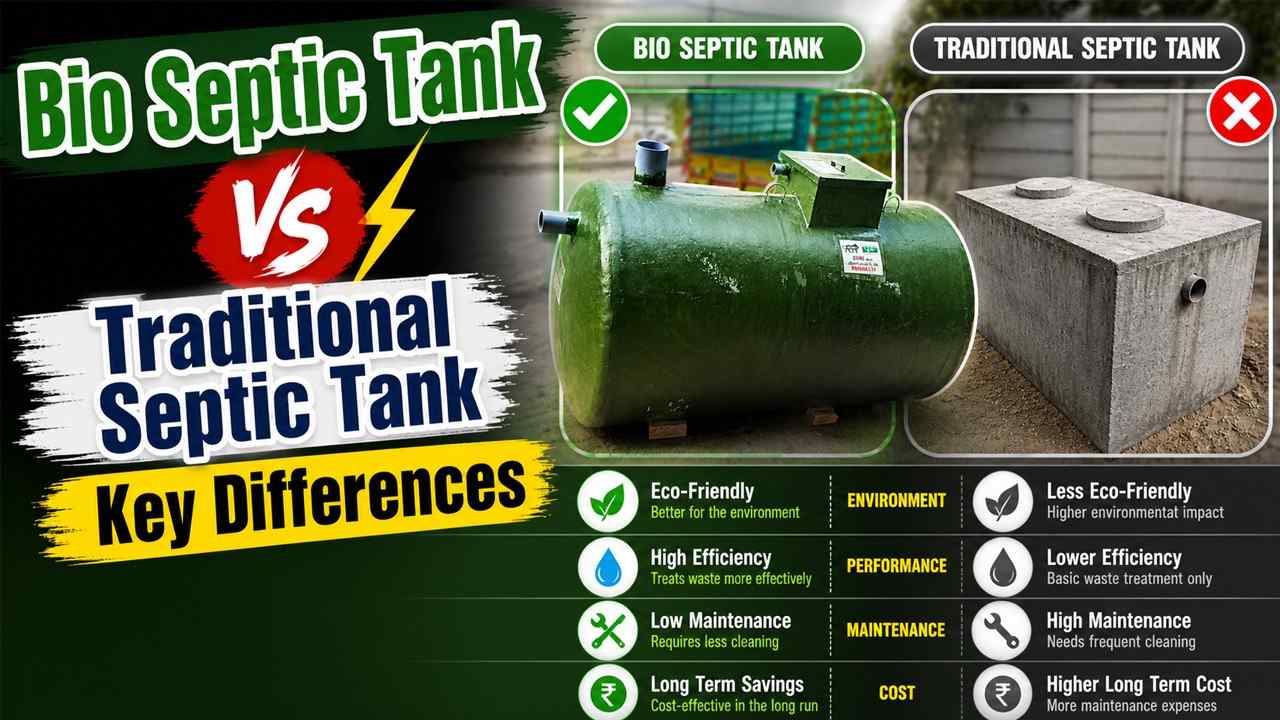
Choosing the right wastewater treatment system for your property is a crucial decision that impacts both your wallet and the environment. When you compare septic tank types, two options stand out: bio septic tanks and traditional septic tanks. Understanding the bio septic tank vs septic tank debate will help you make an informed choice for your home.
What Makes Them Different?
Before diving into the comparison, it’s essential to understand what sets these systems apart. Traditional septic tanks have been the standard for decades, relying primarily on gravity separation and basic anaerobic decomposition. Bio septic tanks, however, represent a modern evolution, incorporating advanced biological processes and beneficial bacteria to treat wastewater more thoroughly.
Let’s explore the key differences in the bio septic tank vs septic tank comparison.
Treatment Efficiency
Traditional Septic Tank
Traditional septic tanks provide basic wastewater treatment through settling and partial decomposition. Solid waste settles at the bottom while liquids flow into the drain field. Anaerobic bacteria naturally present in the tank slowly break down organic matter, but the process is relatively inefficient, treating only 30-40% of pollutants.
The effluent discharged from traditional systems still contains significant levels of:
- Suspended solids
- Organic pollutants
- Harmful bacteria and pathogens
- Nitrogen and phosphorus compounds
Bio Septic Tank
Bio septic tanks achieve 70-90% pollutant reduction through enhanced biological treatment. They create optimized conditions for both aerobic and anaerobic bacteria to thrive, resulting in much cleaner effluent. The multi-stage treatment process removes:
- Most suspended solids through advanced filtration
- Majority of organic matter via bacterial digestion
- Significant portions of nitrogen and phosphorus
- Most harmful pathogens and bacteria
Winner: Bio septic tanks offer superior treatment efficiency.
Environmental Impact
When you compare septic tank types from an environmental perspective, the differences become stark.
Traditional Septic Tank
Traditional systems can contribute to:
- Groundwater contamination from poorly treated effluent
- Nitrogen runoff affecting nearby water bodies
- Algal blooms in lakes and streams due to nutrient discharge
- Soil saturation and potential surface pooling
- Higher risk of environmental damage if not properly maintained
Bio Septic Tank
Bio septic tanks are designed with environmental protection in mind:
- Significantly reduced groundwater pollution
- Lower nutrient levels in discharge preventing ecosystem damage
- Minimal odor emissions
- Safer effluent that poses less risk to soil and water
- Better compliance with strict environmental regulations
Winner: Bio septic tanks are more environmentally friendly.
Maintenance Requirements
Maintenance is a critical factor in the bio septic tank vs septic tank decision.
Traditional Septic Tank
Traditional systems require:
- Pumping every 3-5 years to remove accumulated sludge
- Regular inspections to check for cracks or leaks
- Drain field replacement every 15-25 years on average
- Immediate attention if backups or slow drainage occur
- Potential for more frequent issues due to less efficient waste breakdown
Total annual maintenance cost: Moderate, but with potential for expensive drain field repairs.
Bio Septic Tank
Bio septic tanks need:
- Less frequent pumping (every 5-7 years) due to more efficient waste breakdown
- Annual inspections of aerators and mechanical components (if present)
- Occasional bacterial additive supplements (depending on system type)
- Filter cleaning or replacement as recommended
- Generally fewer drain field issues due to cleaner effluent
Total annual maintenance cost: Slightly higher for routine maintenance, but lower long-term costs due to reduced pumping and drain field longevity.
Winner: Tie – Bio septic tanks require less pumping but may need more technical maintenance.
Installation and Space Requirements
Traditional Septic Tank
- Larger tank size needed for equivalent household capacity
- Extensive drain field area required
- Simple installation process with lower technical requirements
- Can be installed almost anywhere with suitable soil
- Fewer components mean simpler construction
Bio Septic Tank
- More compact design saves property space
- Smaller drain field due to better treatment quality
- Requires professional installation with technical expertise
- May need electrical connection for aerobic systems
- Modern designs optimize space utilization
Winner: Bio septic tanks for space efficiency; traditional for installation simplicity.
Cost Comparison
The bio septic tank vs septic tank cost analysis reveals interesting trade-offs.
Traditional Septic Tank
Initial Installation: $3,000 – $7,000
- Lower upfront investment
- Simpler components
- Widely available contractors
Long-term Costs:
- Regular pumping: $300-$500 every 3-5 years
- Potential drain field replacement: $5,000-$15,000
- Higher water bills in areas with metered water due to less efficient water use
Bio Septic Tank
Initial Installation: $5,000 – $12,000
- Higher initial investment
- Advanced technology components
- Specialized installation required
Long-term Costs:
- Less frequent pumping: $300-$500 every 5-7 years
- Lower drain field replacement risk
- Potential energy costs for aerobic systems: $200-$400 annually
- Extended system lifespan reduces replacement frequency
Winner: Traditional tanks for upfront cost; bio septic tanks for long-term value.
Lifespan and Durability
Traditional Septic Tank
- Tank lifespan: 20-40 years with proper maintenance
- Drain field lifespan: 15-25 years
- Concrete tanks most durable
- Simpler systems mean fewer mechanical failures
Bio Septic Tank
- Tank lifespan: 25-50 years with proper care
- Drain field lifespan: 25-40 years (due to cleaner effluent)
- Advanced materials resist corrosion
- Mechanical components may need periodic replacement
Winner: Bio septic tanks generally last longer.
Performance in Different Conditions
Traditional Septic Tank
- Works in most soil types
- Performance affected by cold weather
- Struggles with high water table conditions
- Can be overwhelmed by excessive water usage
- Limited adaptability to changing regulations
Bio Septic Tank
- Adaptable to various soil conditions
- Better cold weather performance
- Handles high water tables more effectively
- More resilient to usage fluctuations
- Easily meets evolving environmental standards
Winner: Bio septic tanks offer superior adaptability.
Which Should You Choose?
When you compare septic tank types, the right choice depends on your specific situation:
Choose a Traditional Septic Tank if:
- You have a limited budget for installation
- Your property has ample space
- Local regulations don’t mandate advanced treatment
- You prefer simple, proven technology
- Professional maintenance providers are limited in your area
Choose a Bio Septic Tank if:
- Environmental protection is a priority
- You have limited property space
- Local regulations require advanced treatment
- You want long-term cost savings
- You’re building in environmentally sensitive areas
Conclusion
The bio septic tank vs septic tank comparison reveals that while traditional systems offer simplicity and lower upfront costs, bio septic tanks provide superior treatment efficiency, environmental protection, and long-term value. As environmental regulations tighten and sustainable living becomes more important, bio septic tanks represent the future of residential wastewater treatment.
Evaluate your priorities, budget, and local requirements to make the best choice for your property and the environment.
Leave a Reply