
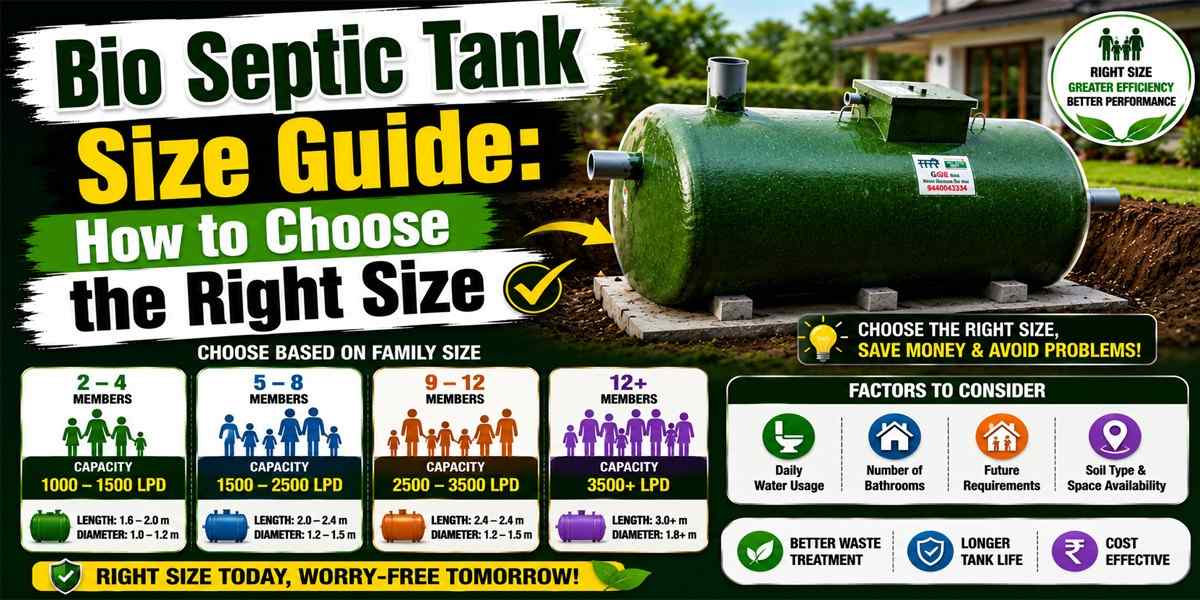
Selecting the appropriate bio septic tank size is one of the most critical decisions when installing a wastewater management system. An undersized tank leads to frequent overflows and system failures, while an oversized tank wastes money and space. This comprehensive guide will help you choose right septic size for your specific needs, ensuring optimal performance and longevity.
Why Bio Septic Tank Size Matters
The septic tank capacity directly impacts how effectively your system treats wastewater. A properly sized tank provides adequate retention time for biological processes to break down waste, prevents premature drain field failure, and minimizes maintenance requirements. Getting the size right from the start saves thousands in repairs and replacements down the line.
Bio septic tanks work by allowing wastewater to separate into three layers: scum on top, clear effluent in the middle, and sludge at the bottom. Bacteria digest organic matter in this environment. If the tank is too small, wastewater flows through too quickly, preventing proper treatment. If too large, it costs more upfront without providing proportional benefits.
Key Factors Determining Bio Septic Tank Size
Number of Occupants
The primary factor influencing bio septic tank size is household occupancy. Each person generates approximately 150-200 liters of wastewater daily in typical Indian households, including water from toilets, showers, kitchens, and laundry.
Recommended Capacity by Household Size:
- 1-3 people: 1,000-1,500 liters
- 4-5 people: 1,500-2,000 liters
- 6-8 people: 2,500-3,000 liters
- 9-12 people: 3,500-4,500 liters
- 13+ people: 5,000+ liters
These recommendations assume standard water usage patterns. Adjust upward for homes with water-intensive lifestyles or downward for water-conservative households.
Property Type and Usage
Residential properties have different requirements than commercial establishments. Guest houses, restaurants, and office buildings generate wastewater differently than homes.
Commercial Properties: Restaurants and hotels need 40-50 liters per seat or guest, with minimum capacities of 3,000 liters even for small establishments. Schools require 20-30 liters per student for day schools, 100-150 liters per student for residential schools. Office buildings typically need 30-40 liters per employee.
Residential Variations: Weekend homes can use smaller capacities (reduce by 25-30%). Joint family homes should add 20% buffer capacity. Homes with servants’ quarters need additional 150-200 liters per person.
Water Usage Patterns
Modern appliances and lifestyle choices significantly impact wastewater generation. High-efficiency fixtures reduce water consumption, while luxury features increase it.
High Water Usage Indicators:
- Multiple bathrooms (3+)
- Bathtubs and jacuzzis
- High-flow showerheads
- Frequent laundry loads
- Dishwashers
- Swimming pools with backwash drainage
- Large landscaped gardens requiring water
Homes with these features should increase their septic tank capacity by 25-40% beyond standard calculations.
Future Expansion Plans
Always consider potential household growth when selecting bio septic tank size. Adding family members, converting spaces into additional bathrooms, or starting a home business all increase wastewater generation.
Installing a larger tank initially costs only 15-25% more than undersizing and then upgrading later, which can cost 200-300% of the original investment due to excavation, removal, and installation expenses.
Standard Bio Septic Tank Sizes Available
Understanding market-standard sizes helps you make practical choices. Manufacturers produce tanks in specific capacities, and custom sizes often carry premium pricing.
Common Residential Sizes:
- 1,000 liters: Small apartments, 1-2 bedrooms
- 1,500 liters: Standard apartments, 2-3 bedrooms
- 2,000 liters: Medium homes, 3-4 bedrooms
- 2,500 liters: Large homes, 4-5 bedrooms
- 3,000-4,000 liters: Villas, joint families
- 5,000+ liters: Large estates, small commercial
Physical Dimensions: Tank dimensions vary by manufacturer and design, but typical measurements are:
- 1,000L: 1.2m diameter × 1.5m height (cylindrical)
- 2,000L: 1.5m diameter × 1.8m height
- 3,000L: 1.8m diameter × 2.0m height
Rectangular tanks have different footprints but equivalent volumes. Ensure your property has adequate space for installation, including access for maintenance vehicles.
Calculating Your Required Capacity
For precise sizing, use this formula:
Daily Wastewater Volume = Number of People × 150 liters Minimum Tank Capacity = Daily Volume × 2 days retention
Example: A family of six generates 900 liters daily (6 × 150). Minimum tank capacity is 1,800 liters (900 × 2). Choosing a 2,000-liter tank provides appropriate capacity with safety margin.
The two-day retention allows adequate time for biological treatment. Some experts recommend three-day retention for better treatment efficiency, especially in areas with poor soil percolation.
Regional Considerations
Local regulations often mandate minimum septic tank capacity requirements. Many Indian municipalities require at least 1,500 liters for any residential property, regardless of household size. Check with your local municipal corporation before finalizing your choice.
Soil type and water table levels also influence sizing. Areas with high water tables or poor drainage may require larger tanks with extended retention times to ensure adequate treatment before effluent reaches the drain field.
Climate affects wastewater generation patterns. Regions with hot climates see higher water usage for bathing and cooling, requiring 10-15% larger tanks than temperate areas.
Common Sizing Mistakes to Avoid
Underestimating Future Needs: Installing minimum capacity without growth buffer is the most common error. Always add 20-30% to calculated requirements.
Ignoring Peak Usage: Calculate for maximum occupancy, not average. Holiday gatherings and guest visits create usage spikes that undersized tanks cannot handle.
Overlooking Appliances: Forgetting to account for dishwashers, washing machines, and other water-intensive appliances leads to undersizing.
Relying Solely on Bedrooms: Bedroom count is a rough guide, but actual occupancy matters more. A three-bedroom home with six people needs more capacity than one with three people.
Professional Assessment Benefits
While this guide helps you choose right septic size, consulting septic system professionals provides property-specific recommendations. They assess soil conditions, calculate precise hydraulic loads, evaluate drain field requirements, ensure regulatory compliance, and recommend appropriate technology levels.
Professional assessments cost ₹2,000-5,000 but prevent expensive mistakes that could cost lakhs in corrections.
Making Your Final Decision
Selecting the appropriate bio septic tank size balances current needs, future plans, and budget constraints. When uncertain between two sizes, choose the larger option. The marginal cost difference is minimal compared to upgrade expenses later.
Proper septic tank capacity ensures your system operates efficiently for decades. Invest time in accurate sizing now, and you’ll enjoy reliable wastewater management without the headaches of an undersized system. Your future self will thank you for making the informed choice today.
Leave a Reply